Budgeting
The Cash Envelope System Explained: How It Works and Whether It's Right for You
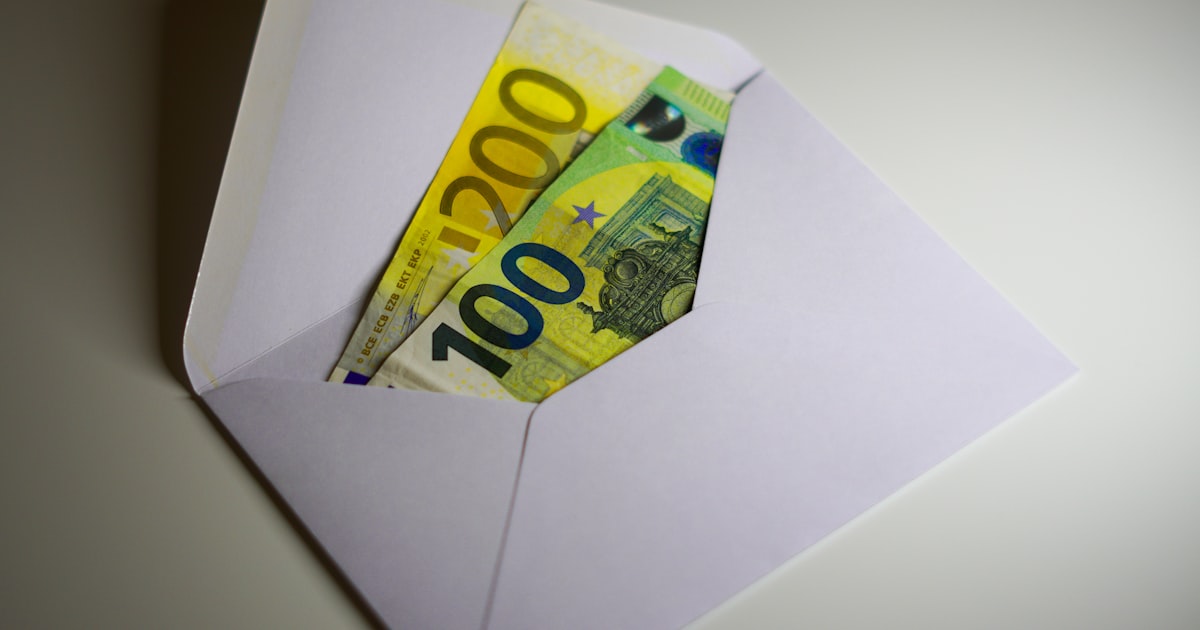
Groceries were budgeted at $500 for the month. By the 22nd, the card had already been swiped for $560 — not because of one big purchase, but a string of $40 and $60 trips that each felt reasonable in the moment. That's the exact gap the cash envelope system is built to close: the space between what a budget says and what a card actually lets happen in real time.
What the Cash Envelope System Actually Is
The method is straightforward. Each spending category gets a physical envelope. At the start of the budget period — usually monthly or per paycheck — cash equal to that category's budgeted amount goes into the envelope. Every purchase in that category comes out of that envelope, in cash, until it's empty.
Once an envelope is empty, spending in that category stops until the next funding cycle. There's no swiping "just this once" and figuring it out later — the cash physically isn't there.
Why Cash Works Differently Than a Card
A card attached to a budgeting app shows the damage after the fact — a notification, a dashboard update, a number that's already changed. Cash makes the constraint physical and immediate: pulling out a nearly-empty envelope at the register is a different experience than tapping a card that has no visible limit at the point of purchase.
This is a well-documented effect in behavioral research on spending, sometimes called the "pain of paying" — physical cash tends to register as a more tangible loss than a card tap, which is part of why cash-based spending limits tend to hold better for a lot of people than card-based ones, even when the budgeted amount is identical.
Setting Up a Cash Envelope System, Step by Step
1. Pick the categories that actually need it. Not every line in a budget benefits from an envelope. Fixed, automatic expenses — rent, insurance, a phone bill — don't need one, since there's no ongoing purchase decision to influence. The best candidates are variable, frequent, discretionary categories: groceries, dining out, entertainment, personal spending, and similar.
2. Set a realistic amount per envelope. Base each amount on actual recent spending, not an idealized number. An envelope funded at $300 for a category that's genuinely been running $450 a month will just run out early and create pressure to break the system in week two.
3. Withdraw and divide the cash. On payday or at the start of the month, withdraw the total across all envelope categories and split it accordingly. A rubber band, a labeled envelope, or a simple cash wallet with dividers all work.
4. Spend only from the matching envelope. Groceries come only from the groceries envelope. If it's empty, that's the month's real answer — not a signal to switch to a card.
5. At the end of the period, review what's left — and what ran out early. An envelope that's consistently empty by the third week usually means the budgeted amount is too low for that category, not that willpower failed. An envelope with consistent leftover cash might mean that category could be trimmed and the money redirected somewhere else, like a sinking fund or savings goal.
Example: A Simple Two-Week Setup
Biweekly pay, three envelope categories:
| Category | Two-week amount |
|---|---|
| Groceries | $220 |
| Dining out | $80 |
| Personal spending | $60 |
| Total cash withdrawn | $360 |
If dining out runs out by day nine of the two-week period, that's real information — either the $80 estimate needs to go up in the next cycle, or dining out needs to slow down for the remaining five days. Either way, it's a decision made in week two instead of a surprise on the statement in week four.
A Full Month, Envelope by Envelope
Here's a more complete example of what a monthly envelope setup can look like once it's covering several categories at once, for a household paid monthly:
| Envelope | Monthly amount | Typical mid-month check |
|---|---|---|
| Groceries | $520 | ~$260 remaining by day 15 |
| Dining out | $120 | ~$50 remaining by day 15 |
| Entertainment | $80 | ~$40 remaining by day 15 |
| Personal spending (per adult) | $100 each | Varies |
| Total cash-based spending | $920 |
The mid-month check matters as much as the initial funding. An envelope running noticeably ahead of a 50% pace by the middle of the month — groceries down to $150 by day 15, for example — is an early warning that gives time to adjust behavior for the rest of the month, instead of discovering the shortfall only when the envelope is already empty on day 24.
Common Mistakes When Starting the Envelope System
Funding every category with cash, not just the problem ones. Trying to convert an entire budget to envelopes at once — including fixed bills that don't benefit from the method — usually creates more friction than value. Starting narrow, with just the one or two categories that have actually been a problem, tends to stick better than an all-at-once overhaul.
Setting envelope amounts too low to "force" better behavior. An envelope funded well below actual typical spending doesn't create discipline — it just runs out early and creates pressure to break the system by switching to a card mid-month. The amount should reflect a realistic, slightly disciplined target, not an aspirational one that isn't grounded in real spending history.
Refilling an empty envelope early from another category. Occasionally justified, but done routinely, it defeats the entire purpose of the hard stop. If borrowing between envelopes happens most months, it's usually a sign the amounts need to be recalculated, not that the borrowing itself is the problem.
Not tracking where the cash actually went. Even with cash spending, keeping a simple running total — a note in a phone, a line on the envelope itself — makes the end-of-month review meaningful. Without it, there's cash gone and no way to learn anything from where it went.
Combining Envelopes With a Broader Budget
The envelope system works best as one piece of a full budget, not a replacement for one. Fixed bills still need to be tracked and paid on schedule; savings goals still need their own dedicated plan; debt payments still need to happen regardless of how the discretionary envelopes perform in a given month. The envelope method's real job is narrower and more specific: putting a hard, physical limit on the categories that have historically been hardest to control through willpower alone.
The Real Tradeoffs
What it solves well: categories with a pattern of "the budget said one thing, the card did another." The hard stop of empty cash is genuinely harder to talk around than a budgeting app that just shows a category creeping into the red.
What it doesn't solve: fixed bills, irregular annual expenses, or spending that happens somewhere cash isn't accepted or convenient — many online purchases, for instance. It also requires actually carrying and managing physical cash, which isn't a fit for everyone's lifestyle or comfort level.
The friction is real, and that's partly the point. Getting cash requires a trip to the bank or an ATM, dividing it takes a few minutes each cycle, and running out mid-month means either waiting or making a deliberate, visible tradeoff between categories. For some people that friction is exactly what makes the method work; for others, it's enough hassle that a digital alternative fits better.
Digital Envelope Alternatives
Several budgeting approaches try to recreate the envelope effect without physical cash:
- Sub-accounts at a bank that supports them, with a separate balance per category
- Prepaid or dedicated debit cards loaded with a category's monthly amount
- A tracked category system in a budgeting tool, checked before each purchase rather than only reviewed after the month ends
These approaches trade some of the physical, immediate friction of cash for convenience — worth it for some people, though the psychological "hard stop" effect tends to be weaker unless the balance is genuinely checked before spending, not just reviewed afterward.
Deciding If It's Right for a Given Budget
The cash envelope system tends to fit best for someone who has already identified one or two specific categories — usually groceries, dining out, or general discretionary spending — where the gap between the planned amount and the actual amount has been a repeated, ongoing problem. It's less necessary for someone whose budget is already holding steady, and less practical for someone whose spending happens mostly online or through recurring bills that cash doesn't touch anyway.
Trying it with just one or two categories, rather than converting an entire budget to envelopes at once, is usually the easiest way to find out if the physical constraint actually helps.
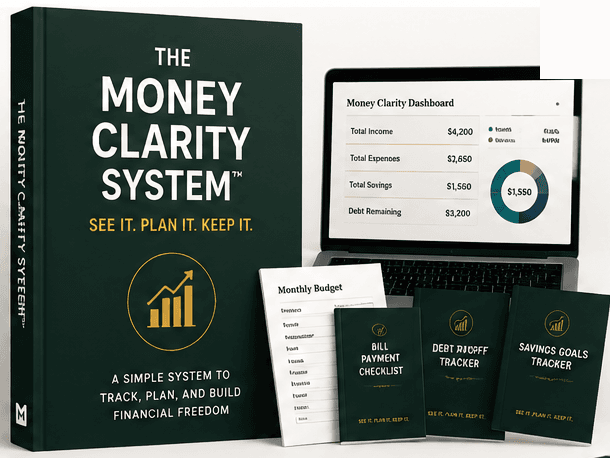
Once the categories that need firmer limits are clear, The Money Clarity System gives you a place to track every category — envelope-based or not — alongside your bills, debt, and savings goals in one dashboard.
Frequently asked questions
Does the cash envelope system work with debit and credit cards?
The classic version uses physical cash specifically because a card doesn't provide the same hard stop. A 'digital envelope' approach — separate sub-accounts or labeled categories in a budgeting tool — can approximate the effect, but it depends on genuinely checking the balance before each purchase rather than only after the fact.
Which spending categories work best with envelopes?
Categories with frequent, variable, discretionary purchases — groceries, dining out, entertainment, personal spending. Categories that are fixed and billed automatically, like rent or a phone bill, don't benefit from the envelope method since there's no ongoing decision to influence.
What happens if an envelope runs out before the month ends?
The category is done until the next funding cycle, or money is deliberately moved over from a different envelope that has a surplus. The system only works as a spending control if running out is treated as a real stop, not a suggestion to grab the credit card instead.
Is carrying cash for budgeting purposes safe?
Carrying only the amount budgeted for the current week or pay period, rather than a full month's worth of envelopes at once, keeps the amount on hand reasonable. A digital or sub-account version avoids the question of carrying cash entirely.
The Money Clarity System™
Ready to actually track it, not just read about it?
The full guide, dashboard, planner, challenges, and bonuses — one payment, lifetime access.
Related articles
Budgeting
What Is a Sinking Fund? A Simple Way to Stop Budget Surprises
A sinking fund is a savings bucket for a specific, predictable future expense — the opposite of an emergency fund, which exists for the unpredictable ones.
8 min read

Budgeting
How to Stop Overspending (Without Just 'Trying Harder')
"Just spend less" rarely works because overspending usually has a specific pattern behind it — a trigger, a category, a moment in the month. Find that, and the fix gets much more specific.
4 min read
Saving Money
Simple Ways to Save Money That Actually Add Up
The most effective savings tips aren't the most extreme ones — they're the ones specific and sustainable enough to actually stick past the first week.
4 min read