Budgeting
How to Stop Overspending (Without Just 'Trying Harder')

"Just spend less" is advice with nothing to actually act on. Overspending usually isn't a general character flaw — it tends to follow a specific, identifiable pattern: a particular time of day, a certain emotional state, a category with no real limit, a specific app or store. Finding that pattern turns a vague problem into a specific, solvable one.
Overspending Usually Has a Trigger
Before trying to fix overspending broadly, look for the pattern behind it. Common triggers include:
- A specific time or context — late at night, after a stressful day, while scrolling social media
- A specific emotional state — stress, boredom, celebration, disappointment
- A specific category with no real limit — one area where spending consistently exceeds any plan, while other categories stay on track
- A specific platform or store — one-click checkout apps, a particular retailer with frequent sales
A week or two of noting not just what was purchased but when and why — briefly, a phone note is enough — often reveals a clear pattern that a general "spend less" resolution never would have surfaced.
Fix the Specific Trigger, Not Spending in General
Once a pattern is identified, the fix gets much more targeted than a broad commitment to spend less:
If it's a specific time or context, build a small barrier into that moment — deleting a shopping app from the home screen, setting a rule not to buy anything online after a certain hour, or simply noticing the pattern in the moment and pausing before completing a purchase.
If it's emotional spending, the spending itself usually isn't the actual problem — it's a response to something else. Finding a different response to that specific trigger (stress, boredom) tends to work better than trying to suppress the spending urge directly without addressing what's driving it.
If it's one specific category, set a real, visible limit for that category specifically, rather than tightening every category evenly. A targeted limit on the one problem area is easier to sustain than a broad, uncomfortable squeeze across categories that were never actually a problem.
If it's a specific platform, add friction deliberately — removing a saved card, logging out instead of staying signed in, unsubscribing from promotional emails that prompt impulse browsing.
Add Friction to Impulsive Spending Specifically
A meaningful share of overspending happens in a low-friction moment — one-click checkout, a saved card, a notification that leads straight to a purchase. Removing that friction-free path doesn't need to be extreme; even a small delay (removing a saved card, requiring a manual entry) is often enough to interrupt an impulsive purchase that wouldn't have survived a moment of actual consideration.
Use a Real, Visible Limit Instead of a Vague Intention
"Spend less on X" isn't specific enough to check against. A real number — a weekly or monthly limit for the specific problem category — gives something concrete to track against, and makes it clear in the moment whether a purchase fits within what's left or not.
Plan for the Trigger Instead of Just Resisting It
If a trigger is predictable — a stressful weekly meeting, a particular day off, a recurring sale — planning around it ahead of time tends to work better than relying on willpower in the moment. A small, pre-planned allowance for that specific trigger, decided in advance, is often more sustainable than an all-or-nothing attempt to avoid it entirely.
What Doesn't Tend to Work
Broad, vague resolutions ("spend less this month") give nothing specific to act on and nothing specific to check progress against.
Extremely tight limits across every category at once tend to feel punishing rather than sustainable, and often lead to a bigger relapse once the restriction becomes too uncomfortable to maintain.
Ignoring the emotional or contextual trigger and focusing purely on the dollar amount tends to leave the actual cause of the pattern unaddressed, so it resurfaces in a different category later.
Building a System Instead of Relying on Willpower
The most reliable fixes for overspending come from changing the system around the specific trigger — removing friction-free paths, setting a real limit on the one problem category, planning ahead for predictable triggers — rather than relying on remembering to "be careful" in the moment it actually happens. A system built around the real pattern works even on days when willpower is running low.
Want to see exactly which category tends to run over each month, instead of guessing where the overspending is coming from? MoneyMap includes a dashboard with overspend warnings built in, so the problem category is visible before the month is over, not after.
Frequently asked questions
Is overspending always about lack of discipline?
Rarely just that. It's more often a specific, identifiable pattern — a particular time of day, a certain emotional state, a category with no real limit set — that a general appeal to 'discipline' doesn't address directly.
Does removing saved payment info actually help?
For online and app-based spending, yes, meaningfully — removing a stored card adds a small amount of friction that's often enough to interrupt an impulsive purchase, especially for one-click checkout flows.
Should every discretionary category have a hard limit?
It helps most for the specific category where overspending actually happens, rather than every category equally. Tight limits everywhere tend to feel punishing and are harder to sustain than a targeted limit on the one or two problem areas.
What if overspending happens even with a detailed budget in place?
That usually points to a trigger the budget itself doesn't address — an emotional pattern, a specific time or place, a category with unrealistic limits. The budget structure and the actual behavioral trigger are two different problems, and both may need attention.
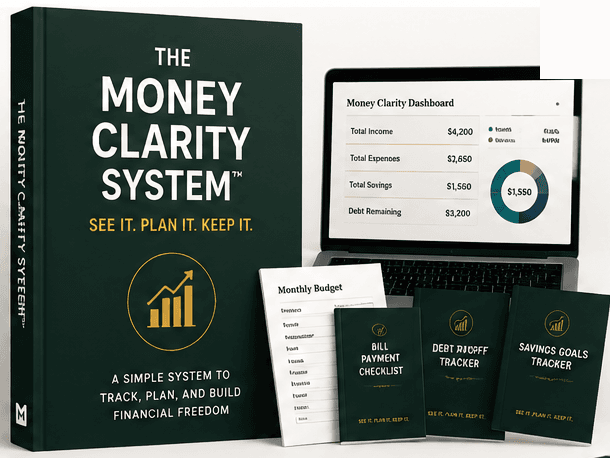
The Money Clarity System™
Ready to actually track it, not just read about it?
The full guide, dashboard, planner, challenges, and bonuses — one payment, lifetime access.
Related articles

Expense Tracking
How to Find Unnecessary Expenses in Your Budget
Generic advice to "cut unnecessary spending" doesn't say what's actually unnecessary. Here's a more specific way to find it in your own numbers.
3 min read

Budgeting
Common Budgeting Mistakes (And What to Do Instead)
Most abandoned budgets fail for a small, repeatable set of reasons — not a lack of discipline. Recognizing them ahead of time is most of the fix.
4 min read

Budgeting
How to Budget Your Money Step by Step
Budgeting isn't complicated in theory. It falls apart in the gap between the plan and what actually happens with a paycheck. Here's a process that closes that gap.
6 min read

Expense Tracking
How to Track Your Expenses (And Actually Keep Doing It)
Most expense tracking attempts fail within a few weeks, not because the concept is hard, but because the method chosen was more effort than the person was willing to sustain.
3 min read