Expense Tracking
How to Track Your Expenses (And Actually Keep Doing It)
Most expense tracking attempts don't fail because the underlying idea is hard to understand. They fail because the specific method chosen required more ongoing effort than the person was actually willing to sustain past the first couple of weeks. Building a system that survives means choosing a method that matches real habits, not the most thorough one available.
Why Expense Tracking Matters Before Anything Else
Budgeting decisions — setting category limits, deciding what to cut — are only as good as the data behind them. Without real tracking, category limits are guesses, and guesses about spending are consistently optimistic compared to reality. Why Expense Tracking Matters covers this connection in more depth, but the short version: tracking comes before budgeting, not alongside it as an optional extra.
Choose a Method Based on What You'll Actually Keep Doing
Manual logging (a notes app, a simple spreadsheet) gives full control and requires no bank connection, but depends entirely on remembering to do it consistently.
Bank or card statement review requires less daily effort but needs a regular time set aside — weekly works well — to categorize transactions after the fact, since a raw list of purchases without categories doesn't reveal much on its own.
An app with automatic bank syncing removes manual entry but introduces occasional miscategorized transactions that need periodic correcting, and often comes with a subscription cost.
None of these is universally correct. The one that actually gets used consistently for a full month beats the most detailed one that gets abandoned after a week.
Log as Close to Real Time as Possible
Expenses logged the same day, or within a day or two, tend to be far more accurate than expenses reconstructed from memory at the end of the month. Memory is unreliable for exactly the kind of small, frequent purchases — a coffee, a quick stop — that matter most for seeing real spending patterns.
A short daily or every-other-day habit, even just glancing at recent transactions and assigning them to categories, produces much more reliable data than a monthly catch-up session.
Categorize Consistently
Tracking without categorization produces a long list of numbers with no pattern visible in it. How to Categorize Expenses covers building a category structure that actually reflects real spending, rather than a generic template.
The specific categories matter less than applying them consistently — a purchase categorized differently each time it recurs makes the category totals unreliable.
Review What's Been Tracked, Not Just Collect It
Tracking without ever reviewing the results is only half the process. A short weekly or monthly look at category totals — comparing them to what was expected, noticing anything surprising — is what actually turns raw tracked data into a useful picture of spending. How to Review Your Monthly Spending covers this review step directly.
What Makes Expense Tracking Fall Apart
Choosing a method that's too detailed to sustain. Tracking every purchase down to the cent with elaborate sub-categories sounds thorough but often collapses under its own maintenance cost within a few weeks.
Logging from memory at the end of the month. This consistently misses small, frequent purchases and produces inaccurate totals.
Never reviewing what's been tracked. Data collected but never looked at doesn't inform any decisions — it's just a longer version of not tracking at all.
Switching methods repeatedly. Every switch resets the habit-building process; sticking with one imperfect method for a full month usually beats hopping between several "better" ones.
Starting This Week
Pick one method — whatever feels most sustainable, not most sophisticated — and commit to using only that one for a full month. Log as close to real time as practical, categorize consistently, and set one specific day to review the results. That's the entire system; the specific tool matters far less than the consistency behind it.
Want tracking and categorization already built into one dashboard instead of assembling your own system? MoneyMap includes expense tracking with categories and totals that update automatically as you log.
Frequently asked questions
How often should expenses be logged?
As close to real time as realistic — daily or every few days works well. Waiting until the end of the month to log everything from memory is one of the most common reasons expense tracking becomes inaccurate.
Is a bank statement enough, or do I need to log expenses manually?
A bank or card statement is a good source of raw data, but it needs categorization to be useful — a long list of uncategorized transactions doesn't reveal patterns the way a tracked, categorized version does.
What's the easiest way to start tracking expenses?
Pick one method — a spreadsheet, an app, or even a notes app — and commit to using only that one for a full month before judging whether it works. Switching methods every few days is a common reason tracking never becomes a habit.
Does expense tracking need to include every small purchase?
Ideally yes, at least at first — small purchases are exactly the ones that go unnoticed and add up. Once patterns become clear, some very minor categories can be tracked more loosely without losing much insight.
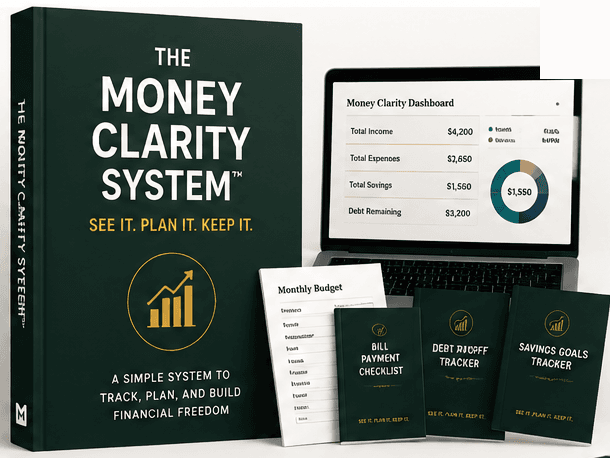
The Money Clarity System™
Ready to actually track it, not just read about it?
The full guide, dashboard, planner, challenges, and bonuses — one payment, lifetime access.
Related articles

Expense Tracking
Where Is My Money Going? How to Actually Find Out
"I don't know where my money goes" is usually a specific, findable gap — not a mystery. A short transaction review almost always answers the question directly.
3 min read

Expense Tracking
How to Categorize Expenses So Your Budget Actually Makes Sense
A category that's too broad hides real spending problems. A category that's too narrow turns logging a purchase into a chore. Here's how to find the level of detail that actually holds up.
4 min read

Expense Tracking
How to Find Unnecessary Expenses in Your Budget
Generic advice to "cut unnecessary spending" doesn't say what's actually unnecessary. Here's a more specific way to find it in your own numbers.
3 min read

Expense Tracking
Why Expense Tracking Matters (Even If Your Budget Seems Fine)
"I don't need to track, I know roughly where my money goes" is a common belief that real tracking data consistently contradicts, in specific and predictable ways.
3 min read