Saving Money
How to Track Savings Progress (So It Actually Feels Real)

Money quietly accumulating in a savings account doesn't feel like progress unless it's actually visible in a way that connects it back to a specific goal. Tracking is what turns saving from an abstract, ongoing habit into something with a visible, motivating trajectory.
Why Automatic Saving Alone Isn't Enough
Automating a savings transfer solves the consistency problem — the money moves whether or not it's actively thought about. But without visible tracking, that automation happens invisibly, and invisible progress doesn't reinforce the habit the way seeing a balance climb toward a specific goal does. Over months, an unmonitored automatic habit is easier to quietly stop or reduce, since there's no visible cost to interrupting it.
Track Both the Dollar Amount and the Percentage
A dollar figure ("$640 saved") keeps the real, tangible number in view. A percentage ("64% of the way to $1,000") gives a quicker sense of overall progress and how much remains. Together, they reinforce each other — the dollar amount feels concrete, and the percentage makes the remaining distance feel more manageable than the raw number alone might.
Set a Consistent Check-In Cadence
Weekly or monthly both work, as long as the cadence is consistent rather than sporadic. Checking randomly — sometimes daily out of excitement, sometimes not for a month — makes progress feel less continuous, which weakens the reinforcing effect that comes from watching steady, expected growth.
Visualize Progress, Not Just a Number
A simple progress bar or visual fill toward a specific goal amount tends to be more motivating than a plain number alone, because it makes the remaining distance feel concrete rather than abstract. This doesn't require anything elaborate — even a basic visual, updated at each check-in, provides a meaningfully different experience than a number sitting in an account statement.
Track Multiple Goals Separately
If several goals are being saved toward at once — covered in How to Build a Savings Plan — each one benefits from its own tracked progress, rather than one combined total that obscures how any single goal is actually doing. Seeing one goal nearly complete while another has barely started is useful, specific information that a blended total would hide.
Notice Stalls Early, Not Months Later
Regular tracking surfaces a stalled goal quickly — a month or two of little to no progress becomes visible right away, rather than being discovered much later when the original deadline has already passed. Catching a stall early allows for a conscious decision: adjust the monthly amount, extend the deadline, or address whatever caused the slowdown, instead of the goal quietly drifting without anyone noticing until it's badly behind.
Celebrate Milestones Along the Way, Not Just the Final Goal
Breaking a larger goal into visible milestones — 25%, 50%, 75% — gives more frequent moments of visible progress on a goal that might otherwise take many months to complete. This matters especially for longer-term goals, where the full target can feel too distant to feel real without smaller, closer markers along the way.
What Tracking Actually Changes
The saving itself — the automated transfer — happens the same way whether or not it's tracked. What tracking changes is the experience of doing it: turning a passive, easy-to-forget habit into something with visible momentum, which makes it significantly more likely to continue past the first few months when the initial motivation for starting has faded.
A Simple System to Start With
Pick a consistent check-in day, note the current balance against the goal amount, calculate the percentage, and glance at how much progress happened since the last check. That's the entire system — the value comes from consistency, not complexity.
Want your savings goals tracked automatically, with progress visible every time you check in? MoneyMap includes a built-in savings tracker built to make progress visible without manual recalculation.
Frequently asked questions
Why does tracking savings progress matter if the automatic transfers are already happening?
Automation ensures the saving happens, but visible progress is what sustains the motivation to keep the habit going, especially when a goal takes many months to reach. Without seeing progress, the habit is more likely to be deprioritized when something else competes for attention.
How often should savings progress be checked?
Weekly or monthly both work well — what matters is picking a consistent cadence rather than checking sporadically, which makes progress feel less continuous and less reinforcing.
Should progress be tracked as a dollar amount or a percentage toward the goal?
Both are useful — the percentage gives a quick sense of how far along the goal is, while the dollar amount keeps the real, tangible number in view. Showing both together tends to be more motivating than either alone.
What if progress stalls for a month or two?
Seeing a stall clearly, rather than not tracking and simply not noticing, is actually the more useful outcome — it prompts a conscious decision to adjust the plan rather than letting the goal quietly drift indefinitely.
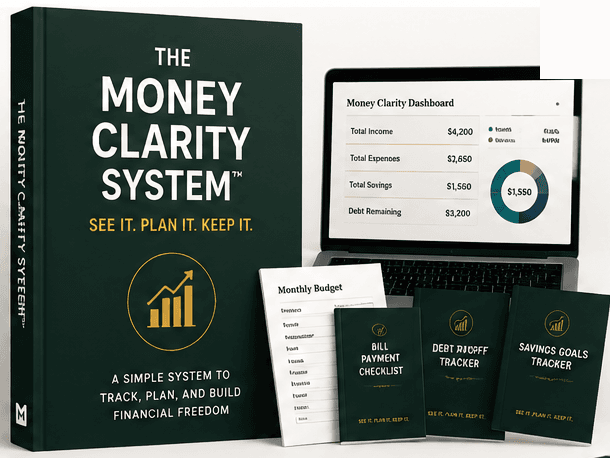
The Money Clarity System™
Ready to actually track it, not just read about it?
The full guide, dashboard, planner, challenges, and bonuses — one payment, lifetime access.
Related articles

Saving Money
How to Set Savings Goals You'll Actually Reach
A savings goal without a number and a deadline isn't really a goal — it's a hope. The difference between the two is what determines whether it actually gets reached.
4 min read

Saving Money
How to Build a Savings Plan That Covers Multiple Goals
A single savings account trying to serve several goals at once makes it hard to know how any one of them is actually progressing. A structured plan separates them clearly.
4 min read

Saving Money
How to Save Money Every Month (Consistently, Not Just Occasionally)
Saving "whatever's left" at the end of the month rarely produces consistent results, because there's rarely much left by the time it's checked. A different structure works better.
3 min read

Financial Goals
How to Create a Personal Money Dashboard (One Place for Everything)
Checking a budget in one app, savings in another, and debt in a third makes it hard to see the whole picture at once. A single dashboard view solves that directly.
3 min read