Budgeting
Common Budgeting Mistakes (And What to Do Instead)

Most abandoned budgets don't fail because the person lacked discipline — they fail for a small, repeatable set of structural reasons that show up across almost every first attempt at budgeting. Recognizing them in advance is most of what it takes to avoid them.
Mistake 1: Estimating Instead of Measuring
Setting a grocery or dining-out budget based on a guess, rather than actual recent spending, almost always produces a number that's wrong — usually lower than reality, since variable spending tends to be underestimated from memory. When the category blows past its limit in the first week, it feels like a personal failure, when the real issue was an inaccurate starting number.
Instead: pull real transaction data for the last month or two before setting any variable-category limit.
Mistake 2: Budgeting From Gross Income Instead of Take-Home Pay
A budget built around a salary figure before taxes and deductions overstates what's actually available, and every category built on top of that inflated number inherits the error.
Instead: use the actual deposited amount from a recent pay stub as the budget's starting point.
Mistake 3: No Buffer for Irregular Expenses
Car repairs, annual insurance renewals, and similar costs are individually unpredictable but collectively predictable — something like this shows up most months. A budget with no category for them treats every one as an emergency and a sign the budget failed.
Instead: fund a small buffer category regularly, specifically for these irregular-but-expected costs.
Mistake 4: Reviewing Only at the End of the Month
Checking spending against the budget only once a month means problems are discovered after they've already compounded across several weeks, when there's no time left to correct course within that period.
Instead: a short weekly check catches an overspending pattern while there's still time to adjust the rest of the month.
Mistake 5: Treating Any Overspending as Total Failure
A category running over doesn't mean the whole budget failed — it means one part of the plan needs adjusting. Treating it as an all-or-nothing outcome is one of the most common reasons people abandon budgeting altogether after a single rough month.
Instead: move money from an under-budget category if one exists, and treat the plan as something to adjust monthly, not a contract to keep perfectly.
Mistake 6: Categories That Don't Match Real Life
Generic categories copied from a template — rather than built from actual spending patterns — often don't reflect how a specific person actually spends, making the budget feel disconnected from reality from the start.
Instead: build categories from a real review of the last couple months of spending, adjusting as patterns become clearer.
Mistake 7: No Specific Plan for Extra Income
A raise, a bonus, or any unexpected extra money, without a deliberate plan for where it goes, tends to get quietly absorbed into slightly higher spending across every category — sometimes called lifestyle creep — without producing any real progress toward savings or debt goals.
Instead: decide in advance where extra income will go before it arrives.
Mistake 8: Splitting Extra Debt Payments Evenly Across Every Balance
It feels fair to put a little extra toward every debt at once, but this is mathematically slower than concentrating extra payments on one balance at a time — covered in more depth in Debt Snowball vs Debt Avalanche.
Instead: pick one clear payoff order and put extra payments toward one balance until it's gone, then move to the next.
Mistake 9: Rebuilding the Whole Budget Every Time Something's Off
When a category turns out to be wrong, rebuilding the entire budget from scratch is more work than necessary and more discouraging than it needs to be.
Instead: adjust the specific categories that were wrong and keep the ones that were accurate — a budget refined over a few months converges on accuracy faster than one rebuilt repeatedly from new guesses.
Mistake 10: Trying to Perfect the Budget Before Starting
Waiting for the ideal system, the perfect categories, or a fully researched method before starting delays the actual habit — which matters more early on than precision does.
Instead: start with a reasonable first draft and refine it with real data after the first real cycle.
The Pattern Behind Most of These
Almost every mistake on this list comes down to one of two things: a number that wasn't grounded in real data, or a review cadence too infrequent to catch problems while they're still small. Fixing those two things alone resolves most of what causes budgets to break down.
Want a system that's already built to avoid these traps — real category tracking, weekly visibility, a built-in buffer — instead of rebuilding a spreadsheet from scratch? MoneyMap is designed around exactly this.
Frequently asked questions
What's the most common reason a new budget gets abandoned?
Categories built on estimates instead of real spending data. When a category is consistently wrong within the first few weeks, the whole budget starts to feel inaccurate and gets abandoned, even though the fix is usually just correcting that one category.
Is it a mistake to budget every single dollar?
Not inherently, but it can backfire if there's no flexible or buffer category at all — a fully rigid budget with no room for anything unplanned tends to break at the first unexpected cost.
How often should a budget actually be checked?
Weekly, ideally. Monthly-only reviews are a common mistake because they catch overspending after it's already happened across several weeks, instead of while there's still time to adjust.
Is it a mistake to change budget categories often?
It depends on why. Adjusting a category because real data shows it was wrong is healthy. Restructuring the whole budget every few weeks out of frustration usually signals a deeper issue — often one of the other mistakes on this list — worth addressing directly instead.
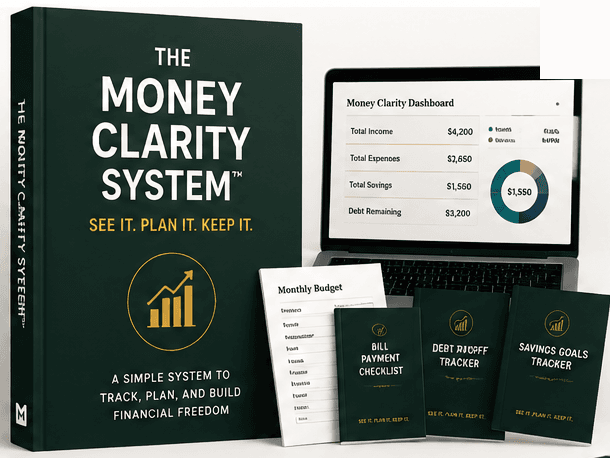
The Money Clarity System™
Ready to actually track it, not just read about it?
The full guide, dashboard, planner, challenges, and bonuses — one payment, lifetime access.
Related articles

Budgeting
How to Budget Your Money Step by Step
Budgeting isn't complicated in theory. It falls apart in the gap between the plan and what actually happens with a paycheck. Here's a process that closes that gap.
6 min read

Budgeting
How to Stop Overspending (Without Just 'Trying Harder')
"Just spend less" rarely works because overspending usually has a specific pattern behind it — a trigger, a category, a moment in the month. Find that, and the fix gets much more specific.
4 min read

Expense Tracking
How to Track Your Expenses (And Actually Keep Doing It)
Most expense tracking attempts fail within a few weeks, not because the concept is hard, but because the method chosen was more effort than the person was willing to sustain.
3 min read

Budgeting
How to Create a Monthly Budget (That Fits Your Actual Paycheck)
A monthly budget only works if it matches how income actually arrives — not a single averaged total that ignores the timing of real paychecks and real bills.
4 min read