Expense Tracking
How to Reduce Monthly Expenses Without Cutting Everything You Enjoy

Reducing monthly expenses is often framed as an exercise in cutting everything — smaller grocery budget, fewer outings, canceled subscriptions across the board. That approach technically lowers spending, but it's also hard to sustain, because it treats genuinely valued spending the same as spending that was barely noticed to begin with. A more targeted approach gets real savings without that trade-off.
Reduction Works Best After Identification
Reducing expenses effectively starts with knowing which expenses are actually worth reducing. Finding unnecessary expenses — the audit step — reveals what's providing low value for its cost. This article picks up from there: once that list exists, how to actually act on it in a way that produces real, sustained savings.
Step 1: Rank by Impact, Not by How Easy It Feels
Not all reductions are equal. Canceling a $60/month subscription that's barely used saves more, faster, than trimming $5 here and there across a dozen small categories — and it requires making one decision instead of dozens of small, ongoing ones. Starting with the highest-impact items first tends to produce meaningful savings with the least ongoing effort.
Step 2: Negotiate Before Canceling
For recurring services — internet, phone plans, insurance, some subscriptions — a short call asking about current promotions, loyalty discounts, or a lower-tier plan often results in a real reduction without losing the service entirely. Providers in competitive industries frequently have better rates available that aren't offered automatically; asking is usually the only step required to access them.
Step 3: Downgrade Before You Cancel Entirely
Between "keep paying full price" and "cancel completely" there's often a middle option: a lower tier, a shared plan, a slower internet speed, a smaller package. Downgrading preserves some of the value while meaningfully reducing the cost — a better fit than an all-or-nothing decision for services that provide real, if reduced, value at a lower tier.
Step 4: Target Categories With Low Value-to-Cost Ratio First
Some categories consistently provide less value relative to their cost than others — a forgotten streaming service, a gym membership rarely used, a subscription box that's more novelty than genuine use. These are the highest-leverage places to reduce, since cutting them doesn't meaningfully affect quality of life the way cutting genuinely valued spending would.
Step 5: Leave High-Value Spending Alone
This might be the most important step, and the one that's easiest to skip. Spending that provides real, ongoing value — a hobby that matters, time with people that matters, a service that genuinely makes life easier — doesn't need to be part of the reduction plan just because it's discretionary. A plan that leaves valued spending intact is far easier to sustain than one that treats every dollar of discretionary spending as equally worth cutting.
Example: A Targeted Reduction Plan
A household reviews their recurring charges and finds three streaming subscriptions (two barely used), a gym membership attended twice in the last three months, and an internet plan at a higher speed tier than actually needed. Rather than also cutting their weekly dinner out — which they genuinely value and look forward to — they cancel two subscriptions, downgrade the gym to a cheaper tier or cancel it in favor of home workouts, and call their internet provider to switch to a lower, sufficient speed tier. The total monthly reduction is meaningful, and the one category that actually mattered to them stayed exactly as it was.
Don't Overlook Fixed Costs, Not Just Subscriptions
Reduction efforts often focus heavily on subscriptions and variable spending, but larger fixed costs — a car loan, a mortgage rate, a phone plan's underlying carrier contract — can sometimes be reduced too, through refinancing, switching providers, or renegotiating terms once a contract period ends. These changes take more effort than canceling a subscription, but the savings from a lower interest rate or a better long-term contract are often larger and longer-lasting than trimming smaller recurring charges.
Reviewing Insurance and Larger Recurring Costs
Beyond subscriptions, larger recurring costs — insurance premiums, in particular — are worth reviewing periodically, since rates and available discounts change over time even if the coverage hasn't. A comparison every year or two, or after a major life change, sometimes reveals savings that a subscription-focused review would miss entirely.
Tracking the Result
Once reductions are made, seeing the actual impact — comparing what's actually being spent before and after — confirms the changes are holding and reveals whether any of the "saved" money quietly got absorbed elsewhere instead of actually staying saved.
How Often to Repeat This Process
A full reduction review doesn't need to happen constantly — every six months to a year is usually enough to catch new subscriptions, renegotiate rates that may have quietly increased, and reassess whether previous cuts are still the right call. More frequent than that tends to produce diminishing returns for the added effort; much less frequent risks letting new low-value spending accumulate unnoticed for a long stretch.
Common Mistakes
Cutting everything equally instead of targeting high-impact items. Small, even cuts across every category are harder to sustain and produce less total savings than a few targeted, higher-impact reductions.
Canceling instead of negotiating first. A quick call asking about a better rate often costs nothing and sometimes preserves the full service at a lower price — worth trying before jumping straight to cancellation.
Cutting spending that's genuinely valued just because it's discretionary. Discretionary doesn't mean low-value — the goal is targeting low-value spending specifically, not all non-essential spending indiscriminately.
Not tracking whether the reduction actually holds. A subscription canceled once but replaced by a similar one a few months later doesn't produce lasting savings — periodic tracking catches this kind of quiet reversal.
Fewer, Smarter Cuts Beat Cutting Everything
The most sustainable way to reduce monthly expenses isn't cutting spending across the board — it's identifying the specific categories providing the least value for their cost, and reducing or eliminating those while leaving genuinely valued spending untouched. This approach produces real, lasting savings without the constant sense of deprivation that tends to make broader, less targeted cuts fall apart within a few months.
To see exactly which categories are costing the most relative to how much they're actually used, The Money Clarity System includes a full expense dashboard that makes this kind of targeted review far easier than reviewing bank statements manually.
Frequently asked questions
What's the difference between finding unnecessary expenses and reducing monthly expenses?
They're two steps of the same process. [Finding unnecessary expenses](/blog/how-to-find-unnecessary-expenses) is the audit — identifying what's not providing real value. Reducing monthly expenses is the action that follows — actually cutting, downgrading, or renegotiating what that audit revealed.
Should I try to reduce every category at once?
Usually not — targeting the two or three highest-impact categories first tends to produce more meaningful savings, with less disruption, than spreading small cuts thinly across everything at once.
Is negotiating bills actually worth the effort?
For recurring services like internet, phone plans, and insurance, yes — a short call asking about current promotions or a lower-tier plan often results in a real, ongoing reduction for very little time invested, since these industries frequently offer better rates to customers who ask.
How do I reduce expenses without feeling deprived?
Focus reductions on categories that provide comparatively low value for their cost, and leave genuinely valued spending intact. A plan that eliminates only low-value spending is much easier to sustain than one that cuts everything equally, since it doesn't feel like a constant sacrifice.
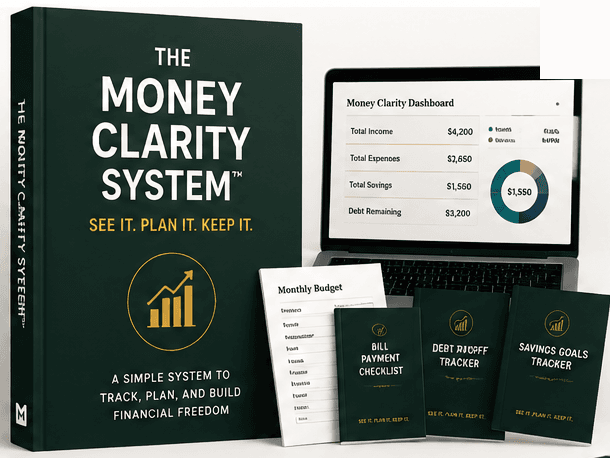
The Money Clarity System™
Ready to actually track it, not just read about it?
The full guide, dashboard, planner, challenges, and bonuses — one payment, lifetime access.
Related articles

Expense Tracking
How to Find Unnecessary Expenses in Your Budget
Generic advice to "cut unnecessary spending" doesn't say what's actually unnecessary. Here's a more specific way to find it in your own numbers.
3 min read

Expense Tracking
Where Is My Money Going? How to Actually Find Out
"I don't know where my money goes" is usually a specific, findable gap — not a mystery. A short transaction review almost always answers the question directly.
3 min read

Saving Money
How to Save Money on a Tight Budget
Generic savings advice assumes room that doesn't exist on a tight budget. A smaller, more deliberate approach works better than trying to force a standard percentage.
4 min read