Budgeting
How to Budget for Back-to-School Expenses Without Overspending

Back-to-school costs feel sudden almost every year, even though the school year starts on the same predictable schedule every time. The surprise usually isn't the expense itself — it's that most families don't plan for it until the shopping list is already in hand.
Why Back-to-School Spending Feels So Disruptive
A single back-to-school trip can combine supplies, clothing, shoes, a backpack, technology, and sometimes activity or sports fees — several categories that don't usually show up together, landing all at once in a single paycheck cycle. Treated as one big unplanned expense, it can meaningfully disrupt an otherwise steady monthly budget. Treated as a known, recurring annual cost — which it is — it's much easier to plan for in advance.
Step 1: Build an Actual List, Not an Estimate
Before setting a number, make a real list specific to your kids and their grade levels: supplies from the school's list, clothing and shoes, a backpack if last year's won't make it, any required technology, and activity or sports fees if applicable. A specific list, even a rough one, produces a far more accurate budget than guessing a round number from memory of what things "usually" cost.
Step 2: Separate Needs From Nice-to-Haves
Within that list, mark what's actually required for the first week of school versus what would be nice but isn't urgent. This isn't about denying reasonable purchases — it's about making sure the required items are funded first, with anything extra fitting in only if the budget allows, rather than everything competing equally for the same limited amount.
Step 3: Spread the Total Across Several Paychecks
Once you have a total, the most effective single change is spreading it across two or three months rather than absorbing it in one. A $400 back-to-school total is a manageable $135–200 addition to a couple of paychecks in the lead-up to school starting — the same $400 landing all at once, alongside everything else due that same week, is what actually causes the disruption.
This works the same way as budgeting for other irregular annual expenses — the total cost doesn't change, but spreading it out in advance changes how much it strains any single month.
Step 4: Set Up a Dedicated Short-Term Fund
A small, separate fund set aside specifically for back-to-school costs — even informally, a labeled envelope or a separate savings bucket — keeps this spending from quietly competing with groceries or household categories in the weeks leading up to school starting. This is the same underlying idea as a sinking fund: saving in small amounts ahead of a known, predictable expense instead of scrambling to cover it from whatever's left in the regular budget when it arrives.
Example: A Two-Month Back-to-School Plan
A family with a $450 total back-to-school list, discovered eight weeks before school starts, splits it into four $112.50 contributions from the next four paychecks into a dedicated fund. By the time shopping actually happens, the money is already set aside — the shopping trip becomes a matter of spending from a fund that's ready, not finding room in that week's regular budget for an unplanned $450.
Where Costs Tend to Run Higher Than Expected
Technology requirements. A required laptop, calculator, or tablet can be one of the largest single line items — checking requirements early, rather than discovering them the week before school starts, gives more time to plan or look for a reasonable price.
Growth-related clothing and shoe replacement. Kids growing between school years is predictable in general even if the exact amount isn't — building in some buffer for this category specifically tends to prevent it from being the line item that blows the plan.
Activity and sports fees that arrive separately from the main supply list. These sometimes come as a second wave of costs a few weeks into the school year rather than all at once at the start — worth accounting for in the total plan even though they don't show up on the initial shopping list.
Budgeting for More Than One Child
With multiple kids, back-to-school costs don't simply multiply evenly — some items (a family calendar, certain shared supplies) don't scale per child, while others (grade-specific technology, individual activity fees) do. Building the list per child rather than estimating one average and multiplying it tends to produce a more accurate total, since costs often vary significantly by age and grade level. Hand-me-down clothing or supplies between siblings, where practical, is also worth accounting for directly in the list rather than assuming every item needs to be purchased new for each child.
What to Do If You're Starting Late
If school starts in two weeks and there's no fund set aside yet, the plan shifts from saving-ahead to triage: fund the genuinely required items first, defer anything non-essential, and consider spreading even the required purchases across two smaller trips rather than one large one if that helps fit them into the current budget without disrupting other categories.
Comparing Prices Before the Season Peaks
Prices on common school supplies and basics often rise as the season peaks in late summer, then sometimes drop again once the rush passes. Buying non-urgent, non-perishable items (basic supplies, a backpack that isn't tied to a specific trend) earlier in the summer, ahead of the peak shopping window, can meaningfully reduce cost on items that don't need to wait until the last minute. Items genuinely tied to a specific grade's supply list, confirmed only once school communicates it, are the main exception worth waiting on.
Common Mistakes
Waiting until the shopping list arrives to think about the budget. The school year's start date is known well in advance — planning from that date, not from the moment the list shows up, gives far more room to spread the cost out.
Treating it as a single-category expense. Back-to-school spending usually touches several budget categories at once (clothing, supplies, technology, fees) — planning it as its own short-term project, rather than trying to absorb it into existing category budgets, keeps it from distorting all of them at once.
No buffer for the inevitable extra item. A forgotten supply, an unexpected fee, or a last-minute request is common enough that building in some cushion from the start avoids a stressful scramble for an extra $20–40 mid-shopping-trip.
A Predictable Expense Deserves a Planned Response
Back-to-school costs aren't actually unpredictable — the date is on a calendar every single year. Planning for it a couple of months ahead, with a real list and a dedicated fund, turns a recurring source of budget stress into just another line item that's already been accounted for by the time it arrives.
For a Sinking Fund Tracker and Annual Expense Planner built for exactly this kind of predictable, recurring cost, The Money Clarity System includes printable planning tools designed to keep expenses like this from ever landing as a surprise.
Frequently asked questions
How much should a back-to-school budget actually be?
This varies significantly by family size, grade level, and local costs, so there's no single right number. The more useful approach is building your own total from an actual list of what your kids need this year, rather than starting from a generic dollar figure.
When should back-to-school budgeting start?
Ideally two to three months before the school year starts, so the total cost spreads across a few paychecks instead of landing on one. Starting even a few weeks out is still better than no planning at all.
What if the cost is higher than expected once school starts?
A buffer of 10–15% above your planned total, built into the budget from the start, absorbs the almost-inevitable extra request or forgotten item without derailing the rest of the month's budget.
Should back-to-school spending come out of the regular monthly budget?
It can, but treating it as its own short-term category — planned and saved for separately, similar to a sinking fund — tends to prevent it from silently overrunning categories like groceries or household spending in the months leading up to school starting.
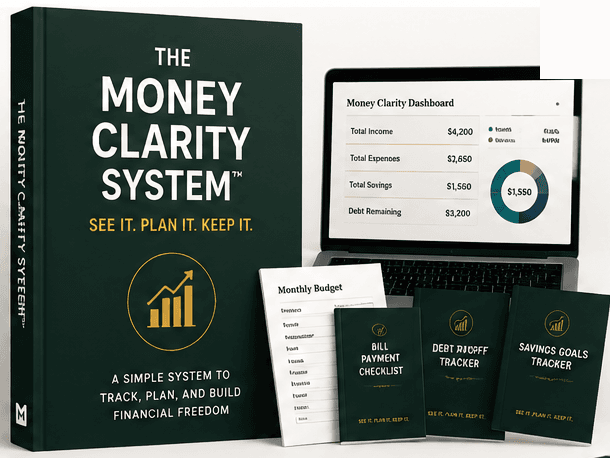
The Money Clarity System™
Ready to actually track it, not just read about it?
The full guide, dashboard, planner, challenges, and bonuses — one payment, lifetime access.
Related articles

Budgeting
How to Budget for Annual and Irregular Expenses
The expenses that break budgets most often aren't the monthly ones — they're the ones that only show up once or twice a year, forgotten until the bill arrives.
7 min read

Saving Money
How to Build a Savings Plan That Covers Multiple Goals
A single savings account trying to serve several goals at once makes it hard to know how any one of them is actually progressing. A structured plan separates them clearly.
4 min read

Budgeting
What Is a Sinking Fund? A Simple Way to Stop Budget Surprises
A sinking fund is a savings bucket for a specific, predictable future expense — the opposite of an emergency fund, which exists for the unpredictable ones.
8 min read