Saving Money
How to Save Money on Groceries Without Meal Planning Every Day
Meal planning gets recommended constantly as the grocery-savings strategy, and for people who stick with it, it works. But it's also a habit that doesn't stick for a lot of people — and it's not the only real lever available. Several of the biggest grocery savings come from how you shop, not from planning every dinner two weeks in advance.
Why Meal Planning Isn't the Only Answer
Meal planning saves money mainly by reducing food waste and impulse purchases. But those same outcomes — less waste, fewer impulse buys — can come from other habits too: a firm budget per trip, fewer total trips, and paying attention to price per unit rather than sticker price. None of these require deciding what's for dinner on Thursday three weeks from now.
Set a Real Number Before You Shop
A specific dollar amount for the trip, decided before walking in, changes shopping behavior more than almost anything else. Without a number, it's easy to add "just one more thing" repeatedly until the total is well beyond what was actually intended. With a number in mind, each addition gets weighed against what it displaces.
This doesn't require a detailed meal plan — just a total, based on your monthly grocery budget divided into however many trips you typically make.
Reduce the Number of Trips
Extra, unplanned trips are one of the most common ways grocery spending creeps up quietly. Each additional trip tends to include a few items that weren't strictly needed — something that catches your eye while you're there for one specific thing. Consolidating into fewer, larger trips (even without a detailed meal plan) tends to reduce this pattern significantly, since there are simply fewer opportunities for it to happen.
Shop With a List, Even a Loose One
A list doesn't need to map to specific meals to be useful — a general list of staples and needed items, built from what's actually low at home, still prevents a large share of impulse additions. The point isn't rigid meal-by-meal planning; it's having a reference point that makes it obvious when something's being added that wasn't actually needed.
Compare Price Per Unit, Not Just the Sticker Price
The larger package or the "family size" option isn't always cheaper per unit — sometimes it is, sometimes a smaller size or a different brand works out lower per ounce or per item. Checking the per-unit price (usually printed on the shelf tag in small text) rather than trusting package size as a proxy for value catches savings that are easy to miss otherwise.
Try Store Brands on a Few Items First
Store-brand versions of staple items — pantry basics, dairy, frozen vegetables — are often very close in quality to name brands at a meaningfully lower price. Rather than switching everything at once, trying store brand on a handful of regularly-bought items is a low-risk way to find where the swap works well for your household and where it doesn't.
Buy in Bulk Only When It Actually Saves Money
Bulk buying genuinely saves when the per-unit price is lower and the item won't spoil before it's used. It costs more, not less, when a large quantity of something perishable goes partially to waste — a common outcome with bulk produce or dairy in smaller households. Shelf-stable staples (rice, pasta, canned goods) are usually safer bulk purchases than anything with a short shelf life.
Example: A Household That Doesn't Meal Plan
A household that's tried meal planning several times without it sticking instead adopts three habits: a firm $140 budget per trip, one trip every two weeks instead of three smaller ones, and a rough list built from what's actually running low. Over a few months, this combination — none of which requires planning individual dinners — produces a noticeably lower and more consistent grocery total than the previous pattern of frequent, unplanned trips without a set budget.
Weighing Pickup and Delivery Against In-Store Shopping
Grocery pickup and delivery can genuinely help control spending, since it removes the in-aisle impulse browsing that drives a lot of unplanned additions — but delivery fees and service charges can offset those savings if used for every single trip. A reasonable middle ground for many households is using pickup or delivery for the bulk, planned portion of a trip, while still handling occasional small in-store runs for a forgotten item, rather than treating it as strictly better or worse than shopping in person in every case.
Track the Total, Even Loosely
Whether or not meal planning is part of the approach, having a general sense of the monthly grocery total — checked against what's actually being spent — makes it much easier to notice if the total is drifting upward before it becomes a significant problem, rather than discovering it much later during a broader budget review.
Using Rewards Programs Without Letting Them Drive Overspending
Store loyalty programs and cashback apps can genuinely reduce the effective cost of a grocery trip, but only when they're applied to purchases that were already planned — buying extra items just to hit a rewards threshold, or choosing a more expensive option because it earns more points, usually costs more than the reward is worth. Treating rewards as a bonus on top of a planned list, rather than a reason to add anything to it, keeps the math actually in your favor.
Common Mistakes
Shopping without any number in mind. Even a rough budget for the trip changes behavior noticeably — going in with no target at all tends to produce the highest totals.
Assuming bulk is always cheaper. Checking the actual per-unit price, and being honest about whether a perishable item will really get used, avoids the false savings of bulk-buying something that partly goes to waste.
Treating "no meal plan" as "no plan at all." A loose list and a firm budget accomplish much of what meal planning does, without requiring the specific habit that hasn't worked in the past.
Too many small trips. Each additional trip is another opportunity for a few extra, unplanned items — fewer, larger trips tend to keep the total more controlled.
Adjusting When Prices Rise
When grocery prices climb generally, a fixed dollar budget that worked fine a year ago can start to feel tight even without any change in actual shopping habits. Rather than treating this as a discipline problem, it's worth periodically checking whether the budget itself needs a modest adjustment to reflect current prices — and, separately, looking for lower-cost substitutes in categories where prices have risen the most, rather than cutting the same amount from every category evenly.
Savings Without a System You Won't Keep Using
The goal isn't adopting a specific system just because it's commonly recommended — it's finding habits that actually reduce spending and that you'll realistically keep doing. A firm budget per trip, fewer trips, and attention to per-unit pricing accomplish a real share of what meal planning offers, without requiring a habit that hasn't stuck in the past.
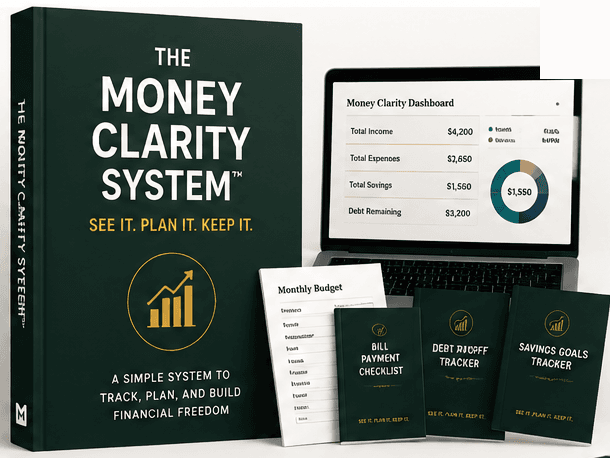
To see your actual grocery total tracked automatically against your monthly budget — rather than estimating it after the fact — The Money Clarity System includes a full expense dashboard built to make exactly this kind of category tracking effortless.
Frequently asked questions
Do I need to meal plan to actually lower my grocery bill?
No — meal planning is one effective approach, but several of the biggest savings (a set budget per trip, fewer trips, tracking price per unit) don't require planning individual meals in advance and can meaningfully lower spending on their own.
Is buying in bulk actually cheaper?
Only when the per-unit price is genuinely lower and the item will be used before it spoils or expires — bulk buying perishables that often go to waste ends up more expensive than buying smaller amounts more often.
How much of grocery overspending is really about extra trips?
For many households, a meaningful share — each additional unplanned trip tends to include a few extra items beyond what was actually needed, and those add up faster than most people expect over a month.
Are store brands actually worth switching to?
In most categories, yes — store-brand versions of staple items are often very similar in quality at a noticeably lower price. It's worth testing on a few items rather than assuming, since quality can vary by category.
The Money Clarity System™
Ready to actually track it, not just read about it?
The full guide, dashboard, planner, challenges, and bonuses — one payment, lifetime access.
Related articles
Saving Money
Simple Ways to Save Money That Actually Add Up
The most effective savings tips aren't the most extreme ones — they're the ones specific and sustainable enough to actually stick past the first week.
4 min read

Saving Money
How to Save Money on a Tight Budget
Generic savings advice assumes room that doesn't exist on a tight budget. A smaller, more deliberate approach works better than trying to force a standard percentage.
4 min read

Expense Tracking
How to Find Unnecessary Expenses in Your Budget
Generic advice to "cut unnecessary spending" doesn't say what's actually unnecessary. Here's a more specific way to find it in your own numbers.
3 min read