Budgeting
How to Budget Your Salary (From Gross Pay to a Real Plan)

A salary figure and a workable budget are two different numbers, and the gap between them — taxes, benefit deductions, retirement contributions — is where a lot of first-time budgets go wrong. Budgeting from the number on an offer letter, rather than what actually lands in a bank account, produces a plan that's wrong before a single category has been assigned.
Start From Actual Take-Home Pay
Pull the actual deposited amount from a recent pay stub or bank deposit — not gross salary divided by pay periods, and not an estimate. Taxes, health insurance premiums, retirement contributions, and other deductions can add up to a meaningful gap between gross and net pay, and a budget needs to be built on the number that's actually available to spend.
If pay periods vary in deposit amount — overtime, a variable bonus component — use a conservative recent figure rather than the highest one seen recently.
Understand the Deductions Coming Out Before the Deposit
Reviewing a pay stub in detail, rather than just glancing at the deposit amount, clarifies exactly what's being deducted and why. This matters for a few reasons: confirming retirement contributions are set at an intended level, checking that tax withholding seems reasonable, and understanding health insurance and other benefit costs as part of the full financial picture, not a separate, invisible line item.
Match the Budget to the Actual Pay Schedule
Salaried pay typically arrives biweekly, semi-monthly, or monthly, and the budget works best when it's structured around that actual schedule rather than an assumed calendar month. How to Create a Monthly Budget covers building a budget cycle around real pay dates in more depth.
Assign the Take-Home Amount Across Real Categories
With the accurate take-home number established, build the budget the same way any budget gets built: fixed expenses first, variable categories based on real spending data, then savings and debt payoff. How to Budget Your Money Step by Step walks through this process in full.
The specific value of starting from an accurate salary number is that every category built on top of it is working with a real, not inflated, total — avoiding the common first-budget mistake of assigning more than what's actually available once deductions are accounted for.
Handle a Raise Deliberately, Not Automatically
When a salary increases, it's easy for the extra income to get silently absorbed into slightly higher spending across every category — a bit more on dining out, a slightly nicer subscription tier — without a deliberate decision behind any of it. This is sometimes called lifestyle creep, and it's a common reason a raise doesn't translate into faster progress toward savings or debt goals.
Deciding in advance where a raise will go — increased savings contribution, extra debt payments, a specific goal — before the first paycheck at the new salary arrives, keeps the increase intentional rather than default-absorbed.
Handle Irregular Components Separately
If part of compensation is irregular — commission, bonuses, variable overtime — it's generally more reliable to budget regular expenses against the guaranteed, predictable base salary, and treat irregular components as they arrive: applied toward savings, debt payoff, or a specific goal, rather than budgeted in advance as if they were guaranteed.
This avoids a common problem where an assumed bonus doesn't materialize exactly as expected, leaving a gap in a budget that had already counted on it for regular expenses.
A Reasonable Starting Allocation
Without a specific existing plan, a reasonable starting point for a salary budget: essential fixed and variable needs first (the actual amount depends heavily on cost of living and existing obligations), then a meaningful share toward savings and debt payoff — commonly referenced around 15-20% combined, adjusted based on actual goals and any existing debt that needs more aggressive attention.
This isn't a fixed rule so much as a reasonable starting reference to adjust once real numbers are in place — similar to the 50/30/20 rule, which covers a comparable percentage-based starting framework in more depth.
Common Mistakes When Budgeting a Salary
Budgeting from gross pay instead of take-home pay, overstating what's actually available.
Letting a raise get absorbed into spending by default, rather than deciding where it goes in advance.
Assuming irregular income components as guaranteed, creating a gap when they don't materialize as expected.
Not reviewing the pay stub itself, missing changes in deductions or benefit costs that affect the real take-home number.
Building From an Accurate Number
A salary budget only works as well as the accuracy of the number it starts from. Getting that number right — real take-home pay, matched to the real pay schedule — is a small step that prevents a lot of downstream frustration when a "balanced" budget on paper doesn't match the actual bank balance.
Want your real take-home pay tracked against your categories automatically as your salary changes? MoneyMap includes a dashboard built to keep this accurate without manual recalculation every time something changes.
Frequently asked questions
Should a budget be based on gross salary or take-home pay?
Take-home pay — the amount actually deposited after taxes and deductions. Budgeting from gross salary overstates what's actually available and leads to a budget that doesn't match reality from the start.
How should a raise be budgeted?
Deliberately, not automatically. Deciding in advance where a raise will go — savings, debt payoff, a specific goal — prevents it from being silently absorbed into slightly higher spending across every category without a clear result.
What if pay includes irregular components like bonuses or commission?
Budget the guaranteed, predictable portion of income for regular expenses, and treat irregular components as a bonus applied toward savings or debt once they actually arrive, rather than budgeting them in advance.
How much of a salary should go toward savings?
There's no single correct percentage — it depends on fixed costs, debt, and goals. A common reference point is 15-20% toward savings and debt payoff combined, adjusted up or down based on the real numbers in a specific budget.
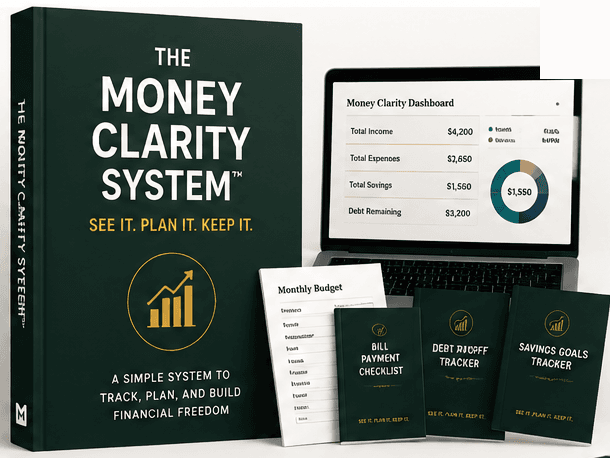
The Money Clarity System™
Ready to actually track it, not just read about it?
The full guide, dashboard, planner, challenges, and bonuses — one payment, lifetime access.
Related articles

Budgeting
How to Create a Monthly Budget (That Fits Your Actual Paycheck)
A monthly budget only works if it matches how income actually arrives — not a single averaged total that ignores the timing of real paychecks and real bills.
4 min read

Financial Goals
How to Automate Your Savings So It Actually Happens
Manual saving depends on remembering and deciding every single time. Automation removes both requirements, which is most of why it works so much more consistently.
3 min read

Saving Money
How to Build a Savings Plan That Covers Multiple Goals
A single savings account trying to serve several goals at once makes it hard to know how any one of them is actually progressing. A structured plan separates them clearly.
4 min read

Budgeting
The 50/30/20 Budget Rule Explained (And When It Doesn't Fit)
The 50/30/20 rule is a reasonable starting framework, not a law of budgeting. Knowing when the percentages don't fit matters as much as knowing the rule itself.
3 min read