Saving Money
How to Stop Impulse Spending: 10 Practical Strategies That Work

Impulse spending has a specific shape: an unplanned purchase, decided and completed in a short window, often triggered by something other than an actual need. It's different from overspending in general — a broader pattern that can come from many sources — and it responds well to a specific set of strategies aimed at the moment the impulse actually happens.
Why Impulse Purchases Are Hard to Catch in the Moment
An impulse purchase happens fast, often before the more deliberate, planning part of decision-making has a chance to weigh in. This is exactly why generic advice like "just don't buy things you don't need" tends not to work — it assumes a moment of deliberation that impulse spending, by definition, skips past.
1. Add a Waiting Period for Non-Essential Purchases
A simple rule — waiting 24 to 48 hours before completing any non-essential purchase over a set amount — interrupts the impulse long enough for the initial urge to fade. Many purchases that feel urgent in the moment don't feel nearly as necessary a day later.
2. Remove Saved Payment Information
Saved card details make a purchase nearly frictionless, which is exactly what makes impulse buying easy. Removing saved payment info from shopping apps and sites — so that a purchase requires manually entering card details each time — adds just enough friction to interrupt many impulse purchases before they're completed.
3. Unsubscribe From Sale and Promotional Emails
Marketing emails are specifically designed to trigger a sense of urgency, and they're one of the most common impulse-spending triggers. Unsubscribing removes a whole category of unplanned prompts before they ever reach you.
4. Identify Your Personal Triggers
Impulse spending often follows a pattern — a specific time of day, a specific emotional state (boredom, stress, celebration), a specific app or store. Naming your own pattern, through honest reflection on recent impulse purchases, makes it much easier to notice and interrupt in the moment, rather than being caught off guard by the same trigger repeatedly.
5. Keep a Running "Want" List Instead of Buying Immediately
When something catches your interest, adding it to a list instead of buying it immediately serves a similar function to the waiting period, but for things you actively want rather than things you're being prompted to buy. Reviewing the list later — after the initial impulse has faded — makes it much easier to tell genuine interest from a passing urge.
6. Set a Specific Discretionary Spending Amount
A defined amount for discretionary spending, decided in advance, gives impulse purchases a real ceiling. Once that number is reached for the period, the decision becomes concrete rather than open-ended, which tends to reduce impulse purchases more effectively than a vague intention to "spend less."
7. Avoid Browsing as Entertainment
Browsing a shopping app or site without a specific purchase in mind is one of the most common paths into an impulse purchase — you don't need to want something to buy it once it's in front of you. Replacing browsing-as-entertainment with a different low-cost habit removes a significant source of unplanned exposure to purchase opportunities.
8. Use Cash or a Separate Card for Discretionary Spending
Physically separating discretionary spending money — cash in an envelope, or a separate card loaded with a set amount — makes the actual limit visible and tangible in a way a shared checking account balance often isn't. Once that specific amount is spent, it's genuinely gone for the period, which reinforces the boundary more directly than a general awareness of your balance.
9. Notice the Emotional State Behind the Urge
Before completing a purchase that feels sudden, a brief pause to notice what's actually driving it — boredom, stress, a bad day, a need for a quick win — often reveals that the purchase is standing in for something else entirely. Naming the actual feeling sometimes reduces the pull of the purchase itself.
10. Build In a Legitimate Small Reward Elsewhere
Impulse spending sometimes fills a real need for a small, immediate reward. Building in a genuine, low-cost reward elsewhere in your routine — even something as simple as a favorite show, a short walk, or a call with a friend — can reduce the pull toward spending as the default source of that quick reward.
Example: Interrupting a Specific Pattern
Someone who notices their impulse purchases cluster around late evenings, scrolling social media after a stressful workday, might apply several of these together: removing saved payment info (adding friction), unsubscribing from retailer emails (removing prompts), and replacing the evening scrolling habit with something else specifically for the first week the pattern is being addressed. None of these alone fully solves it, but together they interrupt the pattern at several points instead of relying on willpower at the single moment of temptation.
Impulse Spending in Physical Stores vs. Online
Online impulse spending and in-store impulse spending often respond to slightly different strategies. Online, friction-based tools (removing saved cards, unsubscribing from emails) tend to be most effective, since the entire path to purchase happens on a screen. In physical stores, a firmer strategy — shopping with a specific list, leaving cards at home and carrying a set cash amount instead, or simply avoiding browsing sections unrelated to what you came for — tends to work better, since there's no digital friction to add.
What to Do After an Impulse Purchase Happens Anyway
An occasional impulse purchase, even while actively working on this, doesn't undo the progress made elsewhere. Reviewing what triggered it — without harsh self-judgment — and adjusting one specific strategy going forward tends to be more useful than treating a single lapse as a sign the whole effort has failed.
Tracking Impulse Purchases Specifically
Beyond general expense tracking, keeping a short, specific log of impulse purchases — what was bought, what triggered it, roughly what it cost — for a few weeks often reveals patterns that aren't obvious from memory alone. This kind of focused tracking tends to be more useful for this particular problem than general spending tracking, since it isolates the specific behavior you're trying to change rather than mixing it in with all other spending.
Common Mistakes
Relying on willpower alone. Impulse spending happens fast, in a moment specifically designed (by marketing, by convenience) to bypass deliberate decision-making — friction-based strategies tend to work better than willpower alone.
Not identifying personal triggers. A generic approach misses the specific pattern driving your own impulse purchases — the strategies that work best are usually the ones matched to your actual triggers.
Treating one impulse purchase as total failure. A single lapse doesn't undo the value of the strategies already in place — the goal is a real reduction in frequency, not a perfect record.
Removing friction without replacing the underlying need. If an impulse purchase was filling a real emotional need, removing the purchase option without addressing that need sometimes just shifts the pattern elsewhere rather than resolving it.
A Pattern That Responds to Specific Interruption
Impulse spending isn't a character flaw — it's a fast, often emotionally-triggered pattern that responds well to specific, practical interruptions: friction at the point of purchase, fewer prompts, and more awareness of your own personal triggers. Applied consistently, these strategies tend to produce a real, noticeable reduction over time, even without requiring constant willpower in the moment.
To see exactly how much of your monthly spending is going toward unplanned, discretionary purchases, The Money Clarity System includes a full expense dashboard that makes this kind of pattern visible at a glance.
Frequently asked questions
What's the difference between impulse spending and overspending?
Overspending describes a budget that's exceeded overall, from any combination of causes. Impulse spending is more specific — unplanned purchases made in the moment, often triggered by emotion, boredom, or a sale. [Stopping overspending generally](/blog/how-to-stop-overspending) is a broader pattern-level goal; the strategies here target the specific in-the-moment trigger.
Is impulse spending always a bad thing?
Not necessarily — an occasional small impulse purchase within an otherwise healthy budget isn't a serious problem. The concern is a consistent pattern that adds up to a meaningful, unplanned drain on the budget over time.
Why do I impulse spend more when I'm stressed?
Stress and strong emotions reduce the mental bandwidth available for deliberate decision-making, which makes an immediate, small reward — like a purchase — more appealing in the moment than it would be otherwise. Recognizing this pattern is often the first step in interrupting it.
Do impulse-spending apps or blockers actually help?
For some people, yes — anything that adds a small amount of friction (removing saved payment info, deleting a shopping app, a waiting-period tool) can meaningfully reduce impulse purchases by interrupting the moment between the urge and the completed purchase.
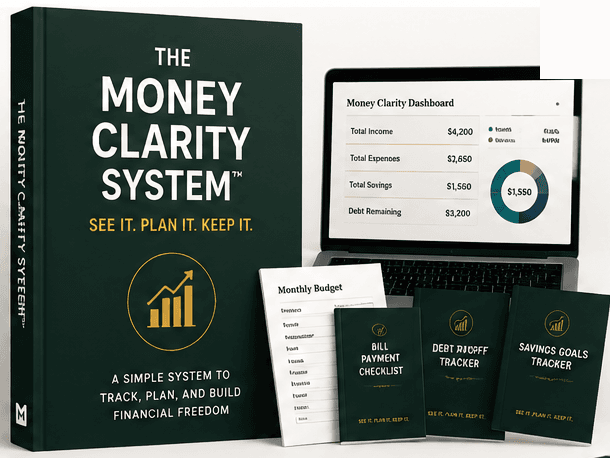
The Money Clarity System™
Ready to actually track it, not just read about it?
The full guide, dashboard, planner, challenges, and bonuses — one payment, lifetime access.
Related articles

Budgeting
How to Stop Overspending (Without Just 'Trying Harder')
"Just spend less" rarely works because overspending usually has a specific pattern behind it — a trigger, a category, a moment in the month. Find that, and the fix gets much more specific.
4 min read

Saving Money
How to Save Money on a Tight Budget
Generic savings advice assumes room that doesn't exist on a tight budget. A smaller, more deliberate approach works better than trying to force a standard percentage.
4 min read
Expense Tracking
Where Is My Money Going? How to Actually Find Out
"I don't know where my money goes" is usually a specific, findable gap — not a mystery. A short transaction review almost always answers the question directly.
3 min read