Saving Money
What Is a No-Spend Month? Rules, Tips, and a Simple Plan

"No-spend month" sounds absolute, and that's exactly why a lot of attempts at one fall apart within the first week — nobody can realistically pause all spending, including rent, groceries, and utility bills. A no-spend month that actually works has a much more specific, clearly defined target: discretionary spending, not spending in general.
What a No-Spend Month Actually Means
A no-spend month is a defined period — usually a full calendar month — during which discretionary, non-essential spending is deliberately paused. Bills, groceries, medical needs, and other genuine necessities continue as normal. What stops is the optional spending: dining out, entertainment subscriptions started fresh, impulse purchases, new clothing beyond genuine need, and similar categories that vary from person to person.
Step 1: Define Exactly What Counts as "No-Spend"
This is the step most attempts skip, and it's the most important one. Before the month starts, write down specifically which categories are paused and which continue as normal. A rule as vague as "don't spend money" is nearly impossible to follow consistently, because it doesn't distinguish between a grocery run (necessary) and a impulse online purchase (exactly the kind of spending the challenge is meant to target).
A clearer version might look like: groceries, bills, gas, and medical needs continue as normal; dining out, entertainment purchases, new clothing, and non-essential online shopping pause for the month.
Step 2: Decide on a Few Reasonable Exceptions in Advance
Deciding exceptions ahead of time — a friend's birthday dinner already planned, a genuinely necessary replacement item — prevents the month from becoming either impossibly rigid or quietly abandoned the first time a reasonable exception comes up. A no-spend month with two or three pre-decided exceptions, held to consistently, tends to work better than one with no flexibility that gets broken unpredictably under real-life pressure.
Step 3: Identify Your Personal Triggers Ahead of Time
Most discretionary spending has a pattern — a specific time of day, a specific app, a specific mood, a specific social situation. Naming your own personal triggers before the month starts (a habit of ordering delivery after a long workday, browsing a shopping app while bored in the evening) makes it much easier to notice and redirect in the moment, rather than being caught off guard by the same pattern repeatedly.
Step 4: Find Free or Already-Paid-For Alternatives
A no-spend month is easier to sustain when there's something to do instead of the paused activity, not just an absence. Free alternatives to common discretionary spending — a walk instead of a paid activity, cooking something new instead of ordering out, a library book instead of a purchased one — fill the same time and often the same underlying need without the spending.
Example: A Realistic No-Spend Month Plan
A household defines their no-spend month as: groceries, bills, gas, and one already-scheduled family birthday dinner continue as normal; dining out beyond that, streaming service sign-ups, and non-essential shopping pause for the full month. They identify their main trigger — ordering delivery on nights when cooking feels like too much effort — and plan two or three easy backup meals specifically for those nights. When a coworker's optional lunch outing comes up mid-month, they decline once, without treating it as a failure of the whole plan.
What a No-Spend Month Is Actually For
The point usually isn't the money saved in that single month, though that's a real benefit — it's resetting spending patterns that have quietly crept upward, and getting clearer visibility into which discretionary spending was actually adding value versus which was just habitual. A no-spend month often reveals which paused categories aren't really missed much, which is useful information for the regular budget going forward, well beyond the month itself.
Doing a No-Spend Month With a Partner or Family
A no-spend month works best when everyone in the household has agreed to the same rules and exceptions — one person quietly opting out while another is holding the line tends to create friction and makes the whole effort feel less worthwhile. Involving a partner (and, in an age-appropriate way, older kids) in defining the rules before the month starts, rather than announcing them after the fact, makes it much more likely everyone actually follows through together rather than one person carrying the entire effort alone.
Handling a Slip Without Abandoning the Whole Month
An unplanned purchase partway through doesn't undo everything that came before it. Treating one lapse as a reason to give up on the rest of the month tends to waste the progress already made — the more useful response is noting what happened, understanding what led to it, and continuing with the plan for the remaining days.
Choosing Which Month to Run It
The specific month matters more than it might seem — running a no-spend month during December, a birthday-heavy month, or a month with a planned trip sets the challenge up against genuine, reasonable spending needs from the start. Picking a comparatively ordinary month, without major known events already on the calendar, gives the challenge a fair chance to actually reflect discretionary spending habits rather than constantly conflicting with legitimate, already-planned costs.
Common Mistakes
No clear definition of what's paused. A vague "no spending" rule is nearly impossible to actually follow — specific categories, decided in advance, make the rule something that can realistically be kept.
No planned exceptions. Refusing to plan for any exception at all often means the first genuinely reasonable one breaks the whole system unpredictably, since there was no framework for handling it.
Treating a slip as total failure. One off-plan purchase is a small deviation, not proof the challenge failed — continuing afterward captures most of the benefit regardless.
Running it too often to be sustainable. A no-spend month works well as an occasional reset — running it constantly tends to produce burnout and eventual abandonment rather than lasting behavior change.
A Reset, Not a Permanent Restriction
A no-spend month isn't meant to be a lifestyle — it's a short, deliberate pause on discretionary spending, useful for resetting habits that have crept upward and for seeing more clearly what spending actually adds value. Defined clearly, with a few sensible exceptions decided in advance, it's realistic to complete — and often reveals more about spending patterns than a full year of loosely tracking expenses would.
To see exactly how much a no-spend month actually saved — compared automatically to a typical month — The Money Clarity System includes a full expense dashboard that makes before-and-after comparisons like this immediate, instead of requiring a manual review after the fact.
Frequently asked questions
Does a no-spend month mean literally zero spending?
No — bills, groceries, and other genuine necessities still get paid. A no-spend month specifically targets discretionary, non-essential spending: dining out, entertainment, impulse purchases, and similar categories, not the fixed and essential costs of running a household.
How is this different from a 30-day money challenge?
A [30-day money challenge](/blog/30-day-money-challenge) is usually a broader habit-building reset with a different small action each day, across several areas of money management. A no-spend month has one specific, consistent rule — pause discretionary spending — applied for the full month.
What happens if I break the rules partway through?
One off-plan purchase doesn't undo the whole month — the more useful response is noting it, understanding what triggered it, and continuing rather than treating a single lapse as a reason to abandon the rest of the month entirely.
Is a no-spend month sustainable long-term?
It's not designed to be a permanent lifestyle — it's a short, deliberate reset. Many people run one occasionally (once a quarter, or once or twice a year) rather than continuously, using it to reset habits and pause spending patterns that have crept upward over time.
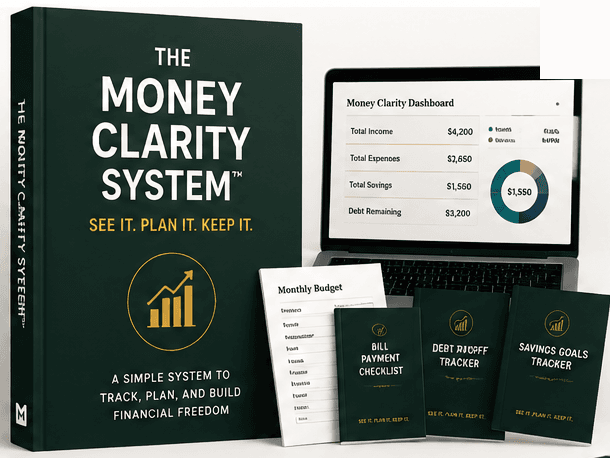
The Money Clarity System™
Ready to actually track it, not just read about it?
The full guide, dashboard, planner, challenges, and bonuses — one payment, lifetime access.
Related articles

Financial Goals
A 30-Day Money Challenge to Reset Your Financial Habits
A 30-day challenge works best as a structured reset — small daily actions that build real visibility and habits, not a single dramatic 30-day sacrifice.
3 min read

Saving Money
Simple Ways to Save Money That Actually Add Up
The most effective savings tips aren't the most extreme ones — they're the ones specific and sustainable enough to actually stick past the first week.
4 min read

Saving Money
How to Save Money on a Tight Budget
Generic savings advice assumes room that doesn't exist on a tight budget. A smaller, more deliberate approach works better than trying to force a standard percentage.
4 min read