Money Management
How to Build Better Money Habits That Actually Stick

Money habits stick or fail for largely the same reasons any habit does — they're not a special category that requires unique willpower. Habits that are too ambitious, too dependent on remembering and deciding fresh each time, or too invisible in their progress tend to fail, whether they're about money, exercise, or anything else.
Start Smaller Than Feels Necessary
A habit that feels easy to maintain is more likely to actually continue than one that feels appropriately ambitious on paper. Starting with a smaller version of a financial habit — tracking just a couple of categories instead of every purchase, saving a modest amount instead of an aggressive one — builds the habit itself first, with room to expand it once it's actually established.
Reduce the Friction Involved
Habits that require an active decision every single time are harder to sustain than ones where the default action is already the right one. Automating a savings transfer removes the decision entirely; keeping a tracking app or spreadsheet easily accessible removes a small but real barrier that otherwise discourages consistent use.
Attach New Habits to Existing Routines
A new habit is easier to remember and maintain when it's attached to something already happening consistently — reviewing spending right after checking email on a specific day, for example, rather than trying to remember it as a completely separate, unscheduled task.
Make Progress Visible
A habit with no visible feedback — no way to see whether it's working — is harder to sustain than one with clear, trackable progress. How to Track Savings Progress covers this specifically for savings goals, but the same principle applies to any financial habit: visible progress reinforces the behavior far more effectively than an assumption that it's probably helping.
Build One Habit at a Time, Not Several
Attempting to overhaul budgeting, tracking, saving, and debt payoff simultaneously spreads limited attention and willpower thin, which reduces the odds that any single one of them survives past the first few weeks. Establishing one habit reasonably well before adding the next tends to produce more lasting change than a comprehensive overhaul attempted all at once.
Expect and Plan for Occasional Lapses
A missed week of tracking, or a month where the savings automation gets paused for a tight budget, doesn't mean the habit has failed — it means it needs to resume. Treating a lapse as proof the whole approach doesn't work is a more common cause of habits actually ending than the lapse itself.
Revisit and Adjust the Habit, Don't Just Abandon It
If a specific habit consistently isn't working — a tracking method that's too tedious, a savings amount that's not sustainable — the more useful response is adjusting the specific thing that's not working, rather than concluding that the entire goal (tracking, saving) isn't achievable.
Why Willpower Alone Isn't the Answer
Habits that rely entirely on remembering and choosing correctly every time are fighting an uphill battle against competing priorities in the moment. Structural changes — automation, reduced friction, visible progress, starting small — do more of the actual work than willpower does, which is why the same person can fail at a habit built one way and succeed at the same habit built a different way.
Building From Here
Pick one specific money habit, make it as small and low-friction as reasonably possible, attach it to an existing routine, and set up a way to see its progress. Once that one habit feels close to automatic, add the next. This slower, sequential approach produces habits that actually last, compared to an ambitious multi-habit overhaul that's harder to sustain from the start.
Want a system that reduces the friction in tracking and reviewing your money, so the habit is easier to keep? MoneyMap is built to make the ongoing habit as low-effort as possible.
Frequently asked questions
Why do financial habits fail more often than other kinds of habits?
They don't fail more often for a special reason — the same principles that make any habit stick or fail (starting small, reducing friction, tracking progress) apply just as directly to money habits, but they're often skipped in favor of relying on motivation alone.
Is it better to build one money habit at a time or several at once?
One at a time generally works better. Building several new habits simultaneously spreads limited willpower and attention thin, reducing the odds that any of them survive past the first few weeks.
How long does it take for a money habit to feel automatic?
It varies, but consistency over a couple of months tends to make a habit feel noticeably more automatic than it did in the first few weeks — the exact timeline matters less than not giving up during the less automatic early stretch.
What if a money habit gets broken for a week or two?
Resuming it is what matters, not maintaining an unbroken streak. Treating a lapse as a reason to abandon the habit entirely is a more common cause of failure than the lapse itself.
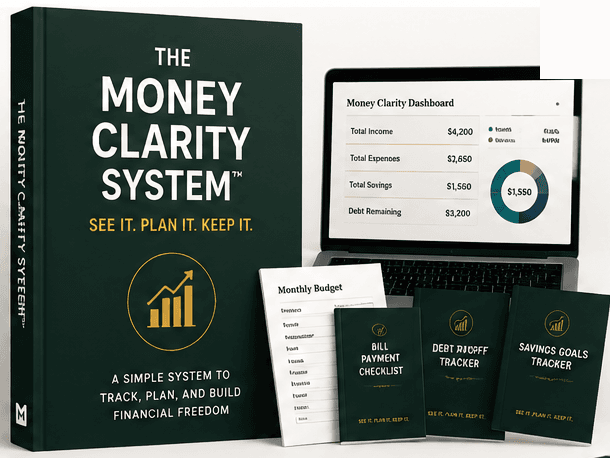
The Money Clarity System™
Ready to actually track it, not just read about it?
The full guide, dashboard, planner, challenges, and bonuses — one payment, lifetime access.
Related articles

Money Management
How to Manage Money Better: The Habits That Actually Matter
People who manage money well aren't usually following a complicated system. They're consistently doing a handful of specific, unglamorous things.
3 min read

Financial Goals
How to Build a Money Management Routine You'll Actually Keep
A money management routine works best as layers — small daily habits, a slightly bigger weekly check-in, and a broader monthly review — each doing a different job.
3 min read

Money Management
How to Take Control of Your Money When It Feels Overwhelming
"Take control of your money" sounds like it requires a dramatic overhaul. In practice, it's a specific, ordered set of small steps — most of them about visibility, not willpower.
4 min read

Money Management
How to Create a Personal Financial Plan From Scratch
A financial plan isn't a single document — it's a budget, a savings structure, and a debt plan, connected to each other instead of managed as separate, disconnected pieces.
3 min read