Debt Management
How to Organize Multiple Debts Into One Clear Plan

When debt is spread across several credit cards, a loan or two, and maybe a buy-now-pay-later plan, the first real obstacle isn't strategy — it's visibility. Scattered across different statements, due dates, and interest rates, multiple debts are hard to make any confident decision about until they're organized into one clear view.
Why Scattered Debt Is Hard to Manage
Each individual account might be easy enough to track on its own — a due date here, a minimum payment there. The difficulty comes from holding all of them in view simultaneously, which is what's actually required to make a good decision about where extra money should go, or which debt deserves priority.
Without a consolidated view, decisions tend to be reactive — paying whatever's due soonest, or whatever feels most urgent — rather than strategic.
Step 1: Build One Complete List
Every debt in a single place: the creditor, current balance, interest rate, minimum payment, and due date. This includes anything easy to overlook — a smaller balance, a store card, an informal loan from family. The list needs to be complete to be useful; a partial list produces a partial, potentially misleading picture.
Step 2: Sort by the Information That Matters Most
Once the list exists, sort it two ways: by interest rate (to identify which debt is costing the most per dollar owed) and by balance size (to see which would clear fastest with focused extra payments). Having both views available makes it easier to choose a payoff order — covered in more depth in Debt Snowball vs Debt Avalanche — based on real numbers rather than a general sense of which debt feels most urgent.
Step 3: Align Due Dates Where Possible
Scattered due dates throughout the month increase the chance of a missed payment simply from the mental load of tracking several different dates. Where a lender allows changing a due date, aligning several payments to shortly after income arrives can reduce this risk and make the whole picture easier to plan around.
Step 4: Set Up Autopay for at Least the Minimums
Missing a minimum payment on any account typically triggers a late fee and can affect credit standing, regardless of how well the rest of the payoff plan is going. Automating minimum payments across every account removes this specific risk, leaving manual attention free for the strategic decision of where extra payments go.
Step 5: Consider Consolidation Carefully, Not Automatically
Combining multiple debts into a single loan or balance transfer can genuinely simplify tracking — one payment instead of several. But it's worth evaluating the actual new interest rate and terms before consolidating; a consolidation that lowers monthly complexity but raises the effective interest rate or extends the payoff timeline can end up costing more overall, even though it feels simpler day to day.
Step 6: Update the List Regularly
A debt list is only useful if it reflects current reality. Updating it at least monthly — ideally each time a payment posts — keeps the organized view accurate, rather than a snapshot that quietly becomes outdated as balances change.
What Disorganized Debt Tends to Cause
Missed payments, not from an inability to pay, but from simply losing track of a scattered due date.
Reactive decisions, paying whatever feels most urgent in the moment rather than what a full view would suggest is the actual priority.
Underestimating the total picture, since debt spread across several accounts can feel individually manageable while adding up to something more significant in total.
Difficulty choosing a payoff strategy, since strategies like the snowball or avalanche method require seeing every debt clearly side by side to apply correctly.
From Scattered to Organized
Getting multiple debts into one clear, complete, regularly updated view is a distinct and necessary step before any payoff strategy can be applied effectively. It doesn't reduce the total owed by itself, but it turns a confusing, scattered situation into something that can actually be planned around.
Want every debt tracked in one place with a payoff plan calculated automatically? MoneyMap includes a debt payoff planner built to organize exactly this.
Frequently asked questions
What's the first step in organizing multiple debts?
Building one complete list — every debt, balance, interest rate, minimum payment, and due date — in a single place. Until this exists, it's difficult to make any real strategic decision about payoff order or extra payments.
Should due dates be aligned to the same time of month?
Where the lender allows changing a due date, aligning several bills to a similar time — ideally shortly after income arrives — can reduce the chance of a missed payment simply due to scattered, hard-to-track due dates.
Is debt consolidation a good way to organize multiple debts?
It can simplify tracking by combining several payments into one, but it's worth evaluating the new interest rate and terms carefully — consolidation that raises the overall rate or extends the timeline can cost more even while feeling simpler.
How often should the full debt list be updated?
At least monthly, ideally each time a payment is made, so the list stays an accurate reflection of what's actually owed rather than a snapshot that quickly goes stale.
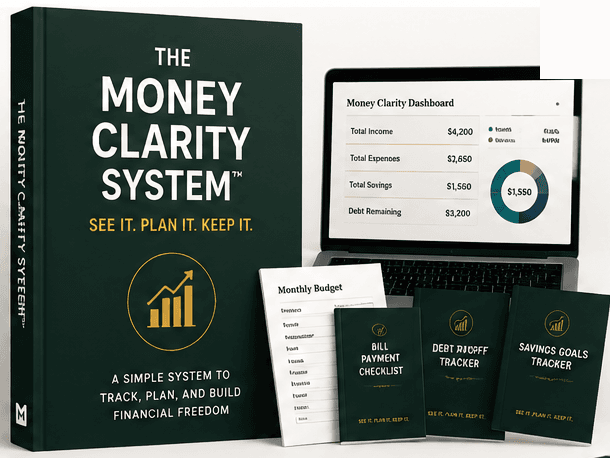
The Money Clarity System™
Ready to actually track it, not just read about it?
The full guide, dashboard, planner, challenges, and bonuses — one payment, lifetime access.
Related articles

Debt Management
How to Create a Debt Payoff Plan (With a Real Timeline)
A list of debts isn't a plan. A plan has an order, a monthly number, and a realistic date attached — here's how to build one from scratch.
3 min read

Debt Management
How to Pay Off Debt: A Complete, Realistic Guide
Paying off debt isn't complicated in concept — it's a specific process that most people never actually lay out in full. Here's the complete version.
3 min read

Debt Management
How to Pay Off Credit Card Debt (A Realistic Plan)
Credit card debt is expensive specifically because of how it compounds. A payoff plan that accounts for that compounding works differently than one that doesn't.
5 min read

Debt Management
Common Debt Payoff Mistakes (And How to Avoid Them)
Most stalled debt payoff plans fail for a small set of recurring, avoidable reasons — not a lack of commitment to getting out of debt.
4 min read