Saving Money
How to Build an Emergency Fund (Even If You're Starting From Zero)

Most emergency fund advice starts with "three to six months of expenses," which is accurate as a long-term target and almost useless as a starting instruction. For someone with no savings at all, that number can feel so far away it doesn't motivate action at all. The more useful starting point is much smaller, and it matters more than the advice usually admits.
Why an Emergency Fund Matters More Than It Sounds
An emergency fund isn't really about the money sitting there — it's about what happens without it. A car repair, a medical bill, an appliance that dies — these are common, not rare, and without savings set aside, they almost always get paid for with a credit card, converting a one-time unplanned cost into ongoing debt with interest attached.
The gap an emergency fund closes isn't between "having money" and "not having money." It's between an unplanned expense staying a one-time event, or turning into a recurring one through debt.
Start With a Number That Actually Motivates You
Three to six months of expenses is a real, worthwhile target — eventually. As a first goal, it's often too large to feel achievable, and a goal that doesn't feel achievable tends to get postponed indefinitely rather than pursued.
A better first target: $500 to $1,000. This range covers the large majority of common unplanned expenses — a car repair, an urgent vet bill, a broken appliance — without needing to reach for a card. It's also genuinely achievable within a few months for most budgets, which matters more for actually getting started than theoretical completeness.
Once that first milestone is reached, the next target can grow — one month of essential expenses, then three, then six — each stage built on the confidence and momentum of the last one, instead of trying to leap straight to the full amount from zero.
Where the Money Should Actually Go
An emergency fund needs to be separate from everyday spending money and reasonably accessible — not locked away for weeks, but also not sitting in a checking account where it quietly gets spent on something else because it's right there.
A basic savings account, kept separate from the checking account used for daily spending, works well for most people. The goal isn't maximizing interest earned on this money — it's making sure it's there, untouched, when something unplanned happens. Growth is a secondary concern; availability is the primary one.
How to Actually Build It Without Blowing Up the Rest of the Budget
Automate a fixed amount, even if it's small. A recurring transfer of $25 or $50 right after payday, before that money has a chance to get spent elsewhere, builds the fund steadily without requiring a fresh decision every week.
Redirect windfalls before they get absorbed into normal spending. A tax refund, a work bonus, a rebate — money that wasn't already budgeted for regular expenses is a natural, painless source for emergency fund contributions, since there's no existing spending habit it's being pulled away from.
Cut one or two specific costs temporarily, not "spending in general." A vague goal to "spend less" rarely produces a specific result. Naming one or two concrete cuts — a subscription, a recurring takeout order — for a defined period, with the savings routed directly into the fund, is more likely to actually happen.
Treat the contribution like a bill, not a leftover. Money left "if there's anything left at the end of the month" tends to not exist by the end of the month. Building the emergency fund contribution into the budget as a fixed line item, similar to a fixed expense, protects it from being absorbed by everything else.
What Counts as a Real Emergency
An emergency fund works best when its purpose stays narrow. A genuine emergency is unplanned, necessary, and urgent — a medical bill, a essential repair, an unexpected loss of income. A planned expense that was simply not budgeted for — a holiday gift, a sale that's too good to pass up — is a budgeting gap, not an emergency, and treating it as one erodes the fund's actual purpose over time.
Having a clear, honest definition in mind before an urge to dip into the fund shows up makes it much easier to hold that line in the moment.
Common Mistakes That Slow This Down
Waiting for a large lump sum instead of starting small. Waiting for "enough money to really start" delays the fund indefinitely. Small, consistent contributions build faster than most people expect, and starting immediately beats waiting for an ideal moment that may not arrive.
Keeping it too accessible. Sitting in the main checking account, the fund tends to get absorbed into regular spending without a clear decision ever being made to spend it. A separate account, even at the same bank, creates just enough friction to keep the fund intact.
Treating any withdrawal as a failure. Using the fund for an actual emergency is success, not failure — it's the entire reason the fund exists. The right response to using it is rebuilding it, not abandoning the habit.
Getting Started Today
The fastest way to build momentum is picking one specific, small action right now: setting up a recurring transfer of whatever amount is genuinely sustainable, even if it's $20 a week. The exact amount matters far less than starting the habit — a fund that grows slowly but consistently gets to $500 faster than a plan for a large contribution that never quite happens.
Want a system that tracks this progress automatically alongside the rest of your budget, instead of managing it separately? MoneyMap includes a built-in savings tracker that shows exactly how close you are to your target, updated as you go.
Frequently asked questions
How much should an emergency fund actually have in it?
The common advice is three to six months of essential expenses, but that's a long-term target, not a starting line. A first, more useful goal is $500–$1,000, since that alone covers most common unplanned expenses without touching a credit card.
Where should an emergency fund be kept?
Somewhere separate from everyday spending money, and accessible within a day or two — a separate savings account works well. It shouldn't be somewhere that penalizes withdrawal or takes weeks to access, since the point is being able to use it exactly when needed.
Should I build an emergency fund or pay off debt first?
A small starter fund first — usually $500 to $1,000 — then debt payoff, then building the fund up further. Having zero savings means any new emergency goes straight onto a card, adding new debt on top of what's already being paid down.
Is it okay to use the emergency fund and not feel like I failed?
Yes — using it for an actual emergency is exactly what it's for. The measure of success isn't never touching it; it's not needing to reach for a credit card when something unplanned happens.
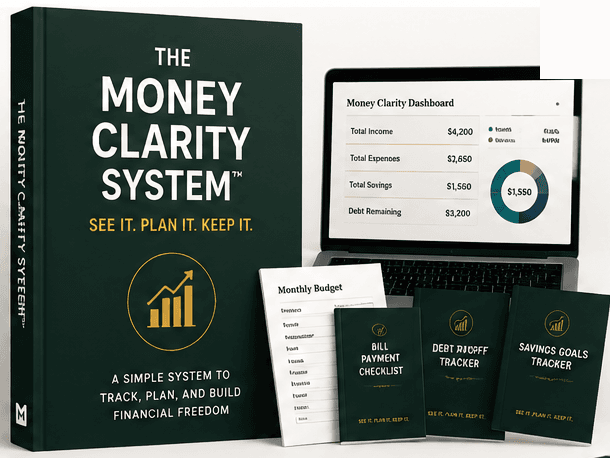
The Money Clarity System™
Ready to actually track it, not just read about it?
The full guide, dashboard, planner, challenges, and bonuses — one payment, lifetime access.
Related articles

Saving Money
How to Save Money Every Month (Consistently, Not Just Occasionally)
Saving "whatever's left" at the end of the month rarely produces consistent results, because there's rarely much left by the time it's checked. A different structure works better.
3 min read

Saving Money
How to Save Your First $1,000
The first $1,000 is disproportionately important — not because of the amount itself, but because it's usually the milestone that makes saving feel real for the first time.
4 min read
Saving Money
How to Set Savings Goals You'll Actually Reach
A savings goal without a number and a deadline isn't really a goal — it's a hope. The difference between the two is what determines whether it actually gets reached.
4 min read

Debt Management
How to Stop Living Paycheck to Paycheck
The paycheck-to-paycheck cycle isn't usually about how much someone earns — it's about a structural gap that keeps pulling every paycheck to zero before the next one arrives.
5 min read