Tagged “budgeting”

Budgeting
What Is a Sinking Fund? A Simple Way to Stop Budget Surprises
A sinking fund is a savings bucket for a specific, predictable future expense — the opposite of an emergency fund, which exists for the unpredictable ones.
8 min read

Budgeting
The Cash Envelope System Explained: How It Works and Whether It's Right for You
The cash envelope system works by making spending physically finite — when the envelope is empty, the category is done for the month, no exceptions.
8 min read

Budgeting
How to Budget After a Raise (So It Actually Changes Something)
A raise only changes a budget if the new money gets a job before the first bigger paycheck arrives — otherwise it tends to quietly absorb into slightly bigger everyday spending.
7 min read

Debt Management
What Is Debt-to-Income Ratio and Why It Matters for Your Budget
Debt-to-income ratio compares monthly debt payments to gross monthly income — a simple number that reveals how much of every paycheck is already spoken for before it arrives.
7 min read

Budgeting
How to Budget for Annual and Irregular Expenses
The expenses that break budgets most often aren't the monthly ones — they're the ones that only show up once or twice a year, forgotten until the bill arrives.
7 min read

Money Management
How to Budget as a Couple Without the Money Fights
Most couples' money fights aren't really about the dollar amount — they're about feeling unheard in how a shared decision got made, or not made at all.
8 min read

Money Management
What to Do After a Bad Spending Month (Instead of Giving Up on Your Budget)
A single overspent month isn't a sign the budget doesn't work — it's information. What matters is what happens in the days right after, not the month itself.
7 min read

Budgeting
How to Budget on a Single Income
A single-income household doesn't have a second paycheck to absorb a mistake — which makes precision, not just discipline, the thing that actually matters most.
7 min read

Budgeting
The 50/30/20 Budget Rule Explained (And When It Doesn't Fit)
The 50/30/20 rule is a reasonable starting framework, not a law of budgeting. Knowing when the percentages don't fit matters as much as knowing the rule itself.
3 min read

Money Management
Personal Finance for Beginners: Where to Actually Start
Personal finance advice usually arrives as an unordered pile: budget, save, invest, pay off debt, build credit. Here's the order that actually makes sense to tackle it in.
4 min read
Budgeting
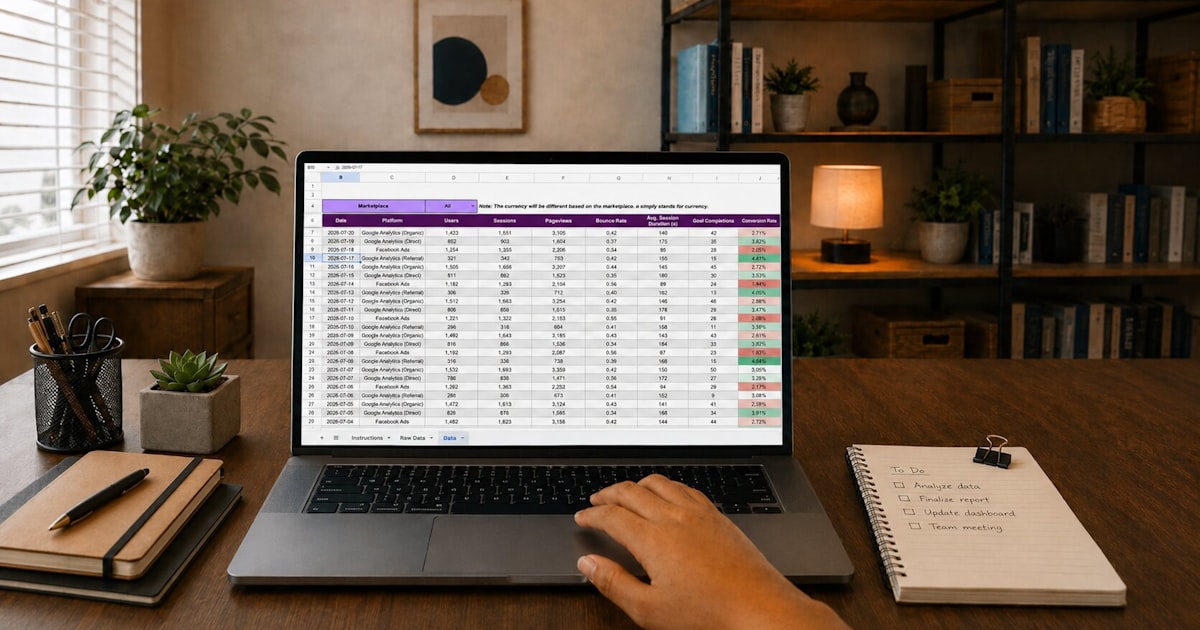
Budgeting Apps vs Spreadsheets: Which One Should You Actually Use?
Both formats can work. Both fail for predictable reasons. The right one depends less on which is 'better' and more on how you actually think about money.
4 min read

Budgeting
How to Budget Your Money Step by Step
Budgeting isn't complicated in theory. It falls apart in the gap between the plan and what actually happens with a paycheck. Here's a process that closes that gap.
6 min read

Budgeting
Common Budgeting Mistakes (And What to Do Instead)
Most abandoned budgets fail for a small, repeatable set of reasons — not a lack of discipline. Recognizing them ahead of time is most of the fix.
4 min read

Debt Management
How Much Should You Put Toward Debt Each Month?
Putting every spare dollar toward debt feels responsible, but it can leave no room for anything else — including the cushion that prevents new debt.
4 min read

Budgeting
How to Budget With Irregular Income
A budget based on an average month quietly assumes every month is average. Irregular income needs a different starting number entirely.
4 min read

Budgeting
How to Budget on a Low Income
Most budgeting advice assumes there's meaningful room to cut. On a low income, that assumption often doesn't hold — the approach needs to be different, not just smaller.
4 min read

Budgeting
How to Budget Your Salary (From Gross Pay to a Real Plan)
A salary figure and a workable budget are two different numbers. The gap between them — taxes, deductions, benefits — is where most first budgets go wrong.
4 min read

Budgeting
How to Create a Monthly Budget (That Fits Your Actual Paycheck)
A monthly budget only works if it matches how income actually arrives — not a single averaged total that ignores the timing of real paychecks and real bills.
4 min read

Expense Tracking
How to Find Unnecessary Expenses in Your Budget
Generic advice to "cut unnecessary spending" doesn't say what's actually unnecessary. Here's a more specific way to find it in your own numbers.
3 min read

Debt Management
How to Stop Living Paycheck to Paycheck
The paycheck-to-paycheck cycle isn't usually about how much someone earns — it's about a structural gap that keeps pulling every paycheck to zero before the next one arrives.
5 min read

Expense Tracking
How to Review Your Monthly Spending (A Simple Process)
Tracking spending without reviewing it is only half the process. A short, structured monthly review is what actually turns data into a better plan.
3 min read

Saving Money
How to Save Money Every Month (Consistently, Not Just Occasionally)
Saving "whatever's left" at the end of the month rarely produces consistent results, because there's rarely much left by the time it's checked. A different structure works better.
3 min read

Budgeting
How to Stop Overspending (Without Just 'Trying Harder')
"Just spend less" rarely works because overspending usually has a specific pattern behind it — a trigger, a category, a moment in the month. Find that, and the fix gets much more specific.
4 min read

Expense Tracking
How to Track Monthly Spending Without It Becoming a Chore
Trying to reconstruct a full month of spending in one sitting is exhausting and inaccurate. A system built around small, weekly check-ins works better.
3 min read

Expense Tracking
How to Track Recurring Expenses (Before They Add Up Unnoticed)
Recurring charges are uniquely easy to lose track of, because they don't require a new decision each time. A dedicated system catches what a general review often misses.
3 min read

Expense Tracking
How to Track Your Expenses (And Actually Keep Doing It)
Most expense tracking attempts fail within a few weeks, not because the concept is hard, but because the method chosen was more effort than the person was willing to sustain.
3 min read

Expense Tracking
How to Categorize Expenses So Your Budget Actually Makes Sense
A category that's too broad hides real spending problems. A category that's too narrow turns logging a purchase into a chore. Here's how to find the level of detail that actually holds up.
4 min read

Financial Goals
The Weekly Money Check-In: A Short Habit That Prevents Big Problems
A weekly money check-in catches an overspending category or a stalled goal while there's still time to adjust — a monthly-only review usually catches it too late.
3 min read

Expense Tracking
Where Is My Money Going? How to Actually Find Out
"I don't know where my money goes" is usually a specific, findable gap — not a mystery. A short transaction review almost always answers the question directly.
3 min read

Expense Tracking
Why Expense Tracking Matters (Even If Your Budget Seems Fine)
"I don't need to track, I know roughly where my money goes" is a common belief that real tracking data consistently contradicts, in specific and predictable ways.
3 min read

Budgeting
Zero-Based Budgeting Explained (With a Real Example)
Zero-based budgeting assigns every dollar a specific job before the month starts. It's more effort than a percentage-based approach — and for some situations, that effort is exactly what's needed.
3 min read

Budgeting
How to Create a Weekly Budget That Actually Works
A monthly budget can hide overspending for weeks before it's visible. A weekly budget catches it while there's still time in the month to adjust.
6 min read

Budgeting
How to Budget for Back-to-School Expenses Without Overspending
Back-to-school costs feel sudden mostly because they're rarely planned for in advance — spread across a few months instead, the same total is far easier to absorb.
6 min read

Saving Money
How to Save Money on Groceries Without Meal Planning Every Day
Meal planning helps, but it's not the only lever — several of the biggest grocery savings come from how you shop, not what you plan to cook each night.
6 min read

Budgeting
How to Build a Christmas Budget Before the Holidays Start
Christmas spending isn't unpredictable — it happens on the same weeks every year. A budget built months in advance turns it into a planned expense instead of a December scramble.
6 min read

Saving Money
How to Budget for a Vacation Without Going Into Debt
A vacation that's actually paid for in advance feels completely different from one that's still being paid off months later — the difference is almost entirely in the planning.
6 min read

Saving Money
What Is a No-Spend Month? Rules, Tips, and a Simple Plan
A no-spend month works when the rules are realistic and defined in advance — most attempts that fall apart do so because "no spending" was never clearly defined to begin with.
6 min read

Budgeting
How to Create a Household Budget for a Family of Four
A family budget isn't just a bigger version of a single budget — kid-specific categories, shared decision-making, and less predictable expenses all need their own place in the plan.
6 min read

Budgeting
How to Plan Your Money When Your Bills Are Due on Different Dates
A calendar-month budget assumes bills line up neatly with the month. When they don't, budgeting by pay period — matching each paycheck to what's actually due before the next one — fits reality better.
6 min read

Expense Tracking
How to Reduce Monthly Expenses Without Cutting Everything You Enjoy
Reducing monthly expenses doesn't have to mean cutting everything equally — targeted reductions in a few specific places usually beat an across-the-board cut that's hard to sustain.
5 min read

Budgeting
How to Budget Your First Apartment: A Complete Beginner's Guide
The rent number is never the real number — a first apartment budget that only accounts for rent is the most common reason the first few months feel tighter than expected.
6 min read

Saving Money
How to Stop Impulse Spending: 10 Practical Strategies That Work
Impulse spending isn't the same as overspending in general — it's a specific pattern of unplanned, in-the-moment purchases, and it responds to a different set of strategies.
6 min read

Saving Money
How to Save Money on a Low Income: A Realistic Step-by-Step Plan
Most saving advice assumes there's meaningful slack in the budget to work with. On a low income, the plan has to be different — smaller targets, protected savings, and realistic pacing.
6 min read

Budgeting
How to Budget When You Get Paid Weekly
Getting paid weekly isn't the same problem as wanting to budget in weekly increments — it's a different pay schedule with its own quirks, including the four-paycheck months that quietly become five.
6 min read

Budgeting
How to Create a Monthly Spending Plan You Can Actually Follow
A spending plan and a monthly budget aren't quite the same thing — the budget is the numbers on paper; the spending plan is what actually happens once the month gets underway.
6 min read

Saving Money
What Is a Financial Cushion and How Much Should You Have?
A financial cushion and an emergency fund solve two different problems — one absorbs everyday timing bumps, the other covers a genuine crisis. Confusing the two is why some budgets feel tight even with savings in the bank.
6 min read

Saving Money
How Much of Your Paycheck Should You Save? A Practical Guide
The common advice to save a fixed percentage of income is a reasonable starting point, but it isn't a rule — the right amount depends heavily on your actual expenses, goals, and where you're starting from.
6 min read

Budgeting
How to Prepare for a Large Annual Expense Before It Arrives
A yearly bill isn't actually unpredictable — it happens on the same date every year. Treating it that way, months in advance, is what makes it stop feeling like a surprise.
6 min read

Money Management
How to Budget With Two Incomes in One Household
Combining two incomes into one household budget is mostly a mechanical problem — proportional splits, account structure, mismatched pay dates — separate from the communication side of budgeting together.
6 min read