Tagged “personal-finance”

Financial Goals
A 30-Day Money Challenge to Reset Your Financial Habits
A 30-day challenge works best as a structured reset — small daily actions that build real visibility and habits, not a single dramatic 30-day sacrifice.
3 min read

Budgeting
The 50/30/20 Budget Rule Explained (And When It Doesn't Fit)
The 50/30/20 rule is a reasonable starting framework, not a law of budgeting. Knowing when the percentages don't fit matters as much as knowing the rule itself.
3 min read

Money Management
Personal Finance for Beginners: Where to Actually Start
Personal finance advice usually arrives as an unordered pile: budget, save, invest, pay off debt, build credit. Here's the order that actually makes sense to tackle it in.
4 min read
Budgeting
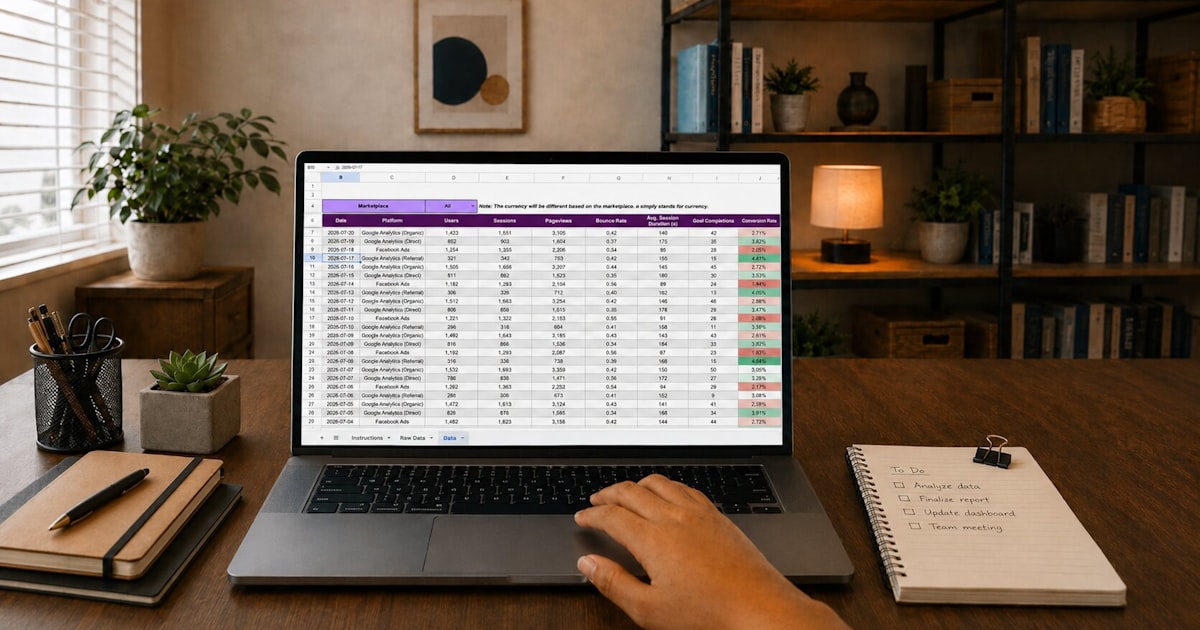
Budgeting Apps vs Spreadsheets: Which One Should You Actually Use?
Both formats can work. Both fail for predictable reasons. The right one depends less on which is 'better' and more on how you actually think about money.
4 min read

Budgeting
How to Budget Your Money Step by Step
Budgeting isn't complicated in theory. It falls apart in the gap between the plan and what actually happens with a paycheck. Here's a process that closes that gap.
6 min read

Budgeting
Common Budgeting Mistakes (And What to Do Instead)
Most abandoned budgets fail for a small, repeatable set of reasons — not a lack of discipline. Recognizing them ahead of time is most of the fix.
4 min read

Debt Management
Common Debt Payoff Mistakes (And How to Avoid Them)
Most stalled debt payoff plans fail for a small set of recurring, avoidable reasons — not a lack of commitment to getting out of debt.
4 min read

Money Management
Financial Goals for Beginners: Where to Start
The hardest part of financial goals for a beginner usually isn't setting them — it's knowing which ones to prioritize first when everything feels equally important.
3 min read

Debt Management
How Much Should You Put Toward Debt Each Month?
Putting every spare dollar toward debt feels responsible, but it can leave no room for anything else — including the cushion that prevents new debt.
4 min read

Financial Goals
How to Automate Your Savings So It Actually Happens
Manual saving depends on remembering and deciding every single time. Automation removes both requirements, which is most of why it works so much more consistently.
3 min read

Budgeting
How to Budget With Irregular Income
A budget based on an average month quietly assumes every month is average. Irregular income needs a different starting number entirely.
4 min read

Budgeting
How to Budget on a Low Income
Most budgeting advice assumes there's meaningful room to cut. On a low income, that assumption often doesn't hold — the approach needs to be different, not just smaller.
4 min read

Budgeting
How to Budget Your Salary (From Gross Pay to a Real Plan)
A salary figure and a workable budget are two different numbers. The gap between them — taxes, deductions, benefits — is where most first budgets go wrong.
4 min read

Financial Goals
How to Build a Money Management Routine You'll Actually Keep
A money management routine works best as layers — small daily habits, a slightly bigger weekly check-in, and a broader monthly review — each doing a different job.
3 min read

Saving Money
How to Build a Savings Plan That Covers Multiple Goals
A single savings account trying to serve several goals at once makes it hard to know how any one of them is actually progressing. A structured plan separates them clearly.
4 min read

Money Management
How to Build Better Money Habits That Actually Stick
Money habits fail for the same reasons any habit fails — too ambitious, too dependent on willpower, no way to see progress. The fix isn't more motivation, it's better structure.
3 min read

Debt Management
How to Create a Debt Payoff Plan (With a Real Timeline)
A list of debts isn't a plan. A plan has an order, a monthly number, and a realistic date attached — here's how to build one from scratch.
3 min read

Budgeting
How to Create a Monthly Budget (That Fits Your Actual Paycheck)
A monthly budget only works if it matches how income actually arrives — not a single averaged total that ignores the timing of real paychecks and real bills.
4 min read

Money Management
How to Create a Personal Financial Plan From Scratch
A financial plan isn't a single document — it's a budget, a savings structure, and a debt plan, connected to each other instead of managed as separate, disconnected pieces.
3 min read

Financial Goals
How to Create a Personal Money Dashboard (One Place for Everything)
Checking a budget in one app, savings in another, and debt in a third makes it hard to see the whole picture at once. A single dashboard view solves that directly.
3 min read

Debt Management
How to Pay Off Credit Card Debt (A Realistic Plan)
Credit card debt is expensive specifically because of how it compounds. A payoff plan that accounts for that compounding works differently than one that doesn't.
5 min read

Money Management
How to Manage Money Better: The Habits That Actually Matter
People who manage money well aren't usually following a complicated system. They're consistently doing a handful of specific, unglamorous things.
3 min read

Debt Management
How to Organize Multiple Debts Into One Clear Plan
Debt spread across several cards, loans, and accounts is hard to make decisions about until it's all in one place. Organizing it is a distinct first step, before any payoff strategy.
3 min read

Money Management
How to Organize Your Personal Finances (A Complete System)
Disorganized finances aren't usually about the amount of money involved — they're about information (bills, accounts, documents) scattered with no single system holding it together.
3 min read

Debt Management
How to Pay Off Debt: A Complete, Realistic Guide
Paying off debt isn't complicated in concept — it's a specific process that most people never actually lay out in full. Here's the complete version.
3 min read

Debt Management
How to Stop Living Paycheck to Paycheck
The paycheck-to-paycheck cycle isn't usually about how much someone earns — it's about a structural gap that keeps pulling every paycheck to zero before the next one arrives.
5 min read

Financial Goals
How to Reach Your Financial Goals Faster (Without Burning Out)
The fastest path to a financial goal isn't always the most extreme one. Sustainable acceleration usually beats an aggressive push that burns out in month two.
3 min read

Saving Money
How to Save Money Every Month (Consistently, Not Just Occasionally)
Saving "whatever's left" at the end of the month rarely produces consistent results, because there's rarely much left by the time it's checked. A different structure works better.
3 min read

Saving Money
How to Save Money on a Tight Budget
Generic savings advice assumes room that doesn't exist on a tight budget. A smaller, more deliberate approach works better than trying to force a standard percentage.
4 min read

Saving Money
How to Save Your First $1,000
The first $1,000 is disproportionately important — not because of the amount itself, but because it's usually the milestone that makes saving feel real for the first time.
4 min read

Saving Money
How to Set Savings Goals You'll Actually Reach
A savings goal without a number and a deadline isn't really a goal — it's a hope. The difference between the two is what determines whether it actually gets reached.
4 min read

Budgeting
How to Stop Overspending (Without Just 'Trying Harder')
"Just spend less" rarely works because overspending usually has a specific pattern behind it — a trigger, a category, a moment in the month. Find that, and the fix gets much more specific.
4 min read

Money Management
How to Take Control of Your Money When It Feels Overwhelming
"Take control of your money" sounds like it requires a dramatic overhaul. In practice, it's a specific, ordered set of small steps — most of them about visibility, not willpower.
4 min read

Saving Money
How to Track Savings Progress (So It Actually Feels Real)
Money quietly building in an account doesn't feel like progress unless it's actually visible. Tracking is what turns saving from an abstract habit into something motivating.
3 min read

Expense Tracking
How to Track Your Expenses (And Actually Keep Doing It)
Most expense tracking attempts fail within a few weeks, not because the concept is hard, but because the method chosen was more effort than the person was willing to sustain.
3 min read

Money Management
The Monthly Financial Checkup: A Simple Recurring Routine
A monthly financial checkup is broader than a spending review — it's a short routine that checks the whole picture: budget, savings, debt, and goals together.
3 min read

Expense Tracking
How to Categorize Expenses So Your Budget Actually Makes Sense
A category that's too broad hides real spending problems. A category that's too narrow turns logging a purchase into a chore. Here's how to find the level of detail that actually holds up.
4 min read

Saving Money
How to Build an Emergency Fund (Even If You're Starting From Zero)
An emergency fund doesn't need to reach 'six months of expenses' to start protecting you. The gap between zero and a few hundred dollars matters more than most advice admits.
5 min read

Debt Management
Debt Snowball vs Debt Avalanche: Which One Pays Off Debt Faster?
Both methods pay off the same debt eventually. They differ in what keeps a person actually going — and that difference matters more than the math suggests.
4 min read

Financial Goals
Short-Term vs Long-Term Financial Goals: How to Balance Both
Treating every financial goal with the same monthly urgency makes short-term goals feel unrealistic and long-term ones feel unnecessarily rushed. They need different treatment.
3 min read

Saving Money
Simple Ways to Save Money That Actually Add Up
The most effective savings tips aren't the most extreme ones — they're the ones specific and sustainable enough to actually stick past the first week.
4 min read

Financial Goals
How to Set Financial Goals You'll Actually Follow Through On
"Save more money" isn't a goal — it's a direction. A goal has a number, a deadline, and a specific plan for getting there. Here's how to build one that actually works.
5 min read

Financial Goals
The Weekly Money Check-In: A Short Habit That Prevents Big Problems
A weekly money check-in catches an overspending category or a stalled goal while there's still time to adjust — a monthly-only review usually catches it too late.
3 min read

Expense Tracking
Why Expense Tracking Matters (Even If Your Budget Seems Fine)
"I don't need to track, I know roughly where my money goes" is a common belief that real tracking data consistently contradicts, in specific and predictable ways.
3 min read

Budgeting
Zero-Based Budgeting Explained (With a Real Example)
Zero-based budgeting assigns every dollar a specific job before the month starts. It's more effort than a percentage-based approach — and for some situations, that effort is exactly what's needed.
3 min read